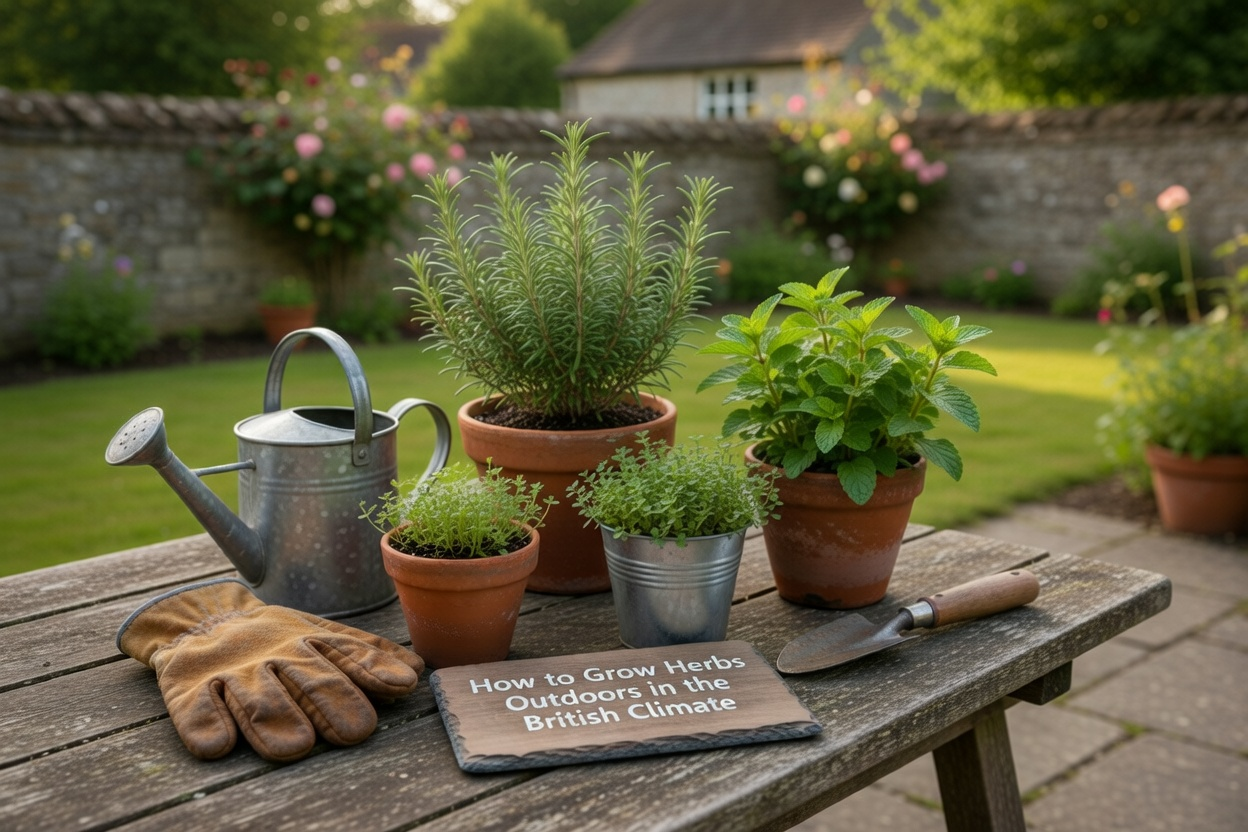
Growing herbs outdoors in the UK is perfectly possible, but you have to work with the climate rather than pretending you live somewhere warmer and drier. The main challenge usually isn’t cold. It’s wet soil, grey springs, sudden late frosts and the odd heatwave that bakes pots dry by lunchtime.
This guide is for home gardeners growing herbs in beds, raised beds, containers, window boxes or a small patio. It’s especially useful if you’ve bought supermarket basil, mint or parsley before, planted it outside, and watched it collapse within a week. We’ve all done it.
The good news is that many herbs are tougher than they look. The trick is matching the herb to the right spot.
Understand What Herbs Actually Need
Most outdoor herbs fall into two loose groups: Mediterranean herbs and soft leafy herbs. Treat them the same and something will usually go wrong.
Mediterranean herbs such as rosemary, thyme, sage, oregano and lavender like sun, sharp drainage and fairly poor soil. They don’t want rich, damp compost around their roots all winter. In many British gardens, these herbs die less from cold and more from sitting wet for months.
Soft leafy herbs such as parsley, coriander, chives, mint and basil prefer more moisture and richer soil. They’re useful, fast-growing and often better in pots or raised beds where you can control watering. Basil is the fussy one. It wants warmth, shelter and steady moisture, so it’s rarely happy in a windy, exposed border.
In my experience, the simplest mistake is giving every herb the “kind” treatment: lots of compost, lots of water, and a cosy pot with no grit. That’s perfect for parsley. It’s terrible for thyme.
Best Herbs to Grow Outdoors in the UK
Some herbs cope with British weather far better than others. If you’re new to herb growing, start with the reliable ones before trying basil, tarragon or lemon verbena outdoors.
| Herb | Best position | Best grown in | Difficulty | UK climate tip |
|---|---|---|---|---|
| Rosemary | Full sun | Pot or free-draining bed | Easy to moderate | Avoid heavy, wet soil |
| Thyme | Full sun | Pot, trough, gravelly bed | Easy | Needs sharp drainage |
| Mint | Sun or partial shade | Pot only | Easy | Spreads aggressively in open ground |
| Chives | Sun or partial shade | Pot or border | Easy | Dies back in winter, returns in spring |
| Parsley | Sun or partial shade | Pot or bed | Easy | Likes moisture and feeding |
| Coriander | Light shade in summer | Pot or bed | Moderate | Bolts quickly in heat |
| Sage | Full sun | Pot or free-draining bed | Easy | Don’t overwater |
| Oregano | Full sun | Pot or raised bed | Easy | Best flavour in sunny spots |
| Basil | Warm, sheltered sun | Pot | Moderate | Bring indoors or protect in cold spells |
If you only have room for four, grow rosemary, thyme, chives and parsley. They cover most everyday cooking and don’t ask too much.
Choose the Right Spot in the Garden
Sun matters, but shelter matters too. A herb growing beside a warm south-facing wall may do far better than the same herb sitting in an open, windy bed.
For rosemary, thyme, sage and oregano, choose the sunniest, driest place you have. A raised bed, gravel garden, terracotta pot or wall-side border can work well. If your soil is heavy clay, don’t just dig a small hole and fill it with compost. That can create a sump where water collects.
Improve drainage by growing these herbs in containers, or by adding grit and organic matter across a broader area of soil. Raised beds also help because water drains away more easily.
For parsley, mint, chives and coriander, a little shade is not a problem. In fact, coriander often lasts longer if it gets morning sun and afternoon shade. Too much hot sun can make it bolt, which means it rushes into flower and stops producing the soft leaves you actually want.
Growing Herbs in Pots
Pots are often the best option for UK herb growing because you can move them, control the compost and stop vigorous herbs taking over. This is especially true for mint. Never trust mint in open ground unless you genuinely want a mint patch forever.
Use pots with drainage holes. That sounds obvious, but decorative containers without drainage are plant coffins in a wet British winter. For Mediterranean herbs, use peat-free multipurpose compost mixed with horticultural grit or perlite to improve drainage.
Terracotta pots are useful because they dry out more quickly than plastic. That suits thyme, rosemary and sage. The downside is that they may need more watering in summer, especially on a patio.
Soft herbs prefer richer compost and steadier moisture. Parsley, basil and coriander will sulk if they dry out completely. In warm weather, small pots can need watering every day. This costs time, not just money.
How to Plant Herbs Outdoors
Plant hardy herbs outdoors in spring once the soil has warmed a little. March can be fine in mild areas, but April or May is safer in colder gardens. Tender herbs such as basil should not go outside permanently until the risk of frost has passed, usually late May or early June in many parts of the UK.
Before planting, water the herb in its pot. Gently loosen tight roots, especially if the plant is pot-bound. Set it at the same depth it was growing before, firm it in, then water well.
Give herbs enough space. Tiny plants from the garden centre can look lonely at first, but rosemary and sage can become woody shrubs. Crowding them encourages poor airflow and disease, particularly in damp weather.
Supermarket herbs need extra care. Many are grown quickly under protected conditions and packed as several seedlings in one pot. If you plant the whole thing outside straight away, it often fails. Split the clump into smaller sections, pot them on, and harden them off gradually before leaving them outside.
Watering and Feeding Without Overdoing It
The right watering routine depends on the herb. Rosemary, thyme, sage and oregano prefer to dry slightly between watering. Parsley, mint, chives and basil need more consistent moisture.
Containers dry out faster than borders. Check by pushing a finger into the compost. If the top few centimetres feel dry, water thoroughly until water runs from the bottom. A quick splash on the surface doesn’t do much.
Feed leafy herbs lightly through the growing season. A general liquid feed every few weeks can help parsley, chives and basil. Don’t overfeed Mediterranean herbs. Rich, lush growth often has weaker flavour and can be more vulnerable to winter damage.
Here’s the surprise: herbs are not always better when pampered. Thyme grown a little lean and dry often tastes stronger than thyme grown soft and lush in rich compost.
Picking Herbs So They Keep Producing
Regular picking keeps many herbs productive. Don’t wait for a plant to become huge before using it.
For basil, pinch out the growing tips to encourage bushy growth. Remove flower buds when you see them if you want more leaves. For parsley and chives, cut outer stems or leaves rather than taking the whole plant down to the base every time.
Rosemary, thyme and sage should be picked lightly and often during the growing season. Avoid cutting hard into old woody stems, especially with lavender and rosemary, because they may not regrow well from bare wood.
Mint can be cut back quite firmly if it gets leggy. It usually bounces back. That’s mint for you.
Getting Herbs Through Winter
Hardy herbs can stay outside in most UK gardens, but winter wet is the real enemy. Rosemary, thyme, sage and lavender need drainage more than they need wrapping in fleece.
Move pots to a sheltered wall, raise them on pot feet, and make sure they’re not sitting in saucers full of rainwater. If your garden is exposed, a cold frame or unheated greenhouse can help, but don’t seal herbs into a damp, airless space.
Parsley may survive winter, especially in a sheltered spot, though it often becomes tired in its second year. Chives die back naturally and return in spring. Mint also dies back, then reappears when the weather warms.
Basil is not hardy. Treat it as a summer annual outdoors, or bring a healthy plant inside before cold nights arrive. Even indoors, it needs light and warmth to keep going.
Common Problems in British Herb Gardens
Yellow leaves often mean overwatering, poor drainage, or hungry compost. Check the roots before adding feed. If the compost is wet and sour-smelling, water is probably the problem.
Leggy growth usually means not enough light. Move pots to a brighter spot, or cut back lightly to encourage fresh shoots. Basil and coriander are especially prone to stretching if they’re grown in dim conditions.
Slugs and snails enjoy soft herbs, especially basil and parsley. Keep pots away from damp corners, check under rims, and protect young plants until they’re established. Aphids can also appear on soft new growth, but a strong jet of water or squashing small colonies by hand often deals with them.
Coriander bolting is not really a failure. It’s what coriander does when stressed by heat, drought or long days. Sow small batches every few weeks rather than expecting one plant to last all summer.
A Simple Outdoor Herb Plan
If you’re starting from scratch, don’t buy ten herbs at once. Start with a small, useful group and learn how your garden behaves.
For a sunny patio, plant rosemary, thyme, sage and oregano in separate pots with free-draining compost. Add parsley and chives in slightly richer compost nearby. Keep mint in its own pot, away from open soil.
For a shadier garden, focus on parsley, chives, mint and coriander. You may still manage thyme or oregano in your brightest spot, but don’t waste the best sunny wall on mint. Mint will cope elsewhere.
For a kitchen-door setup, choose herbs you use every week. A plant you actually pick is worth more than six interesting labels you ignore.
What to Do Next
Next 10 minutes: look at your outdoor space and find your warmest, sunniest, most sheltered spot. That’s where rosemary, thyme, sage, oregano or basil should go.
Today: choose two hardy herbs and one soft herb. A good beginner mix is thyme, chives and parsley. If you love cooking with mint, grow it in a separate pot.
This week: buy or prepare containers with drainage holes, use the right compost mix, and plant after checking the weather forecast. If nights are still cold, keep tender herbs under cover for now.
Growing herbs outdoors in the British climate is mostly about restraint. Don’t overwater the dry-loving herbs. Don’t under-water the leafy ones. Give basil warmth, keep mint contained, and protect Mediterranean herbs from wet winter roots. Do that, and you’ll have fresh herbs within arm’s reach for much of the year.