Potatoes are one of the most forgiving crops you can grow in a UK garden, but they’re not quite as effortless as “plant one, get a bucketful back”. The container, compost, variety and watering all matter.
This guide is for home gardeners growing potatoes in a small garden, patio, raised bed, courtyard or allotment-style veg patch. You don’t need open ground. You do need enough depth, steady moisture and the right type of potato for your space.
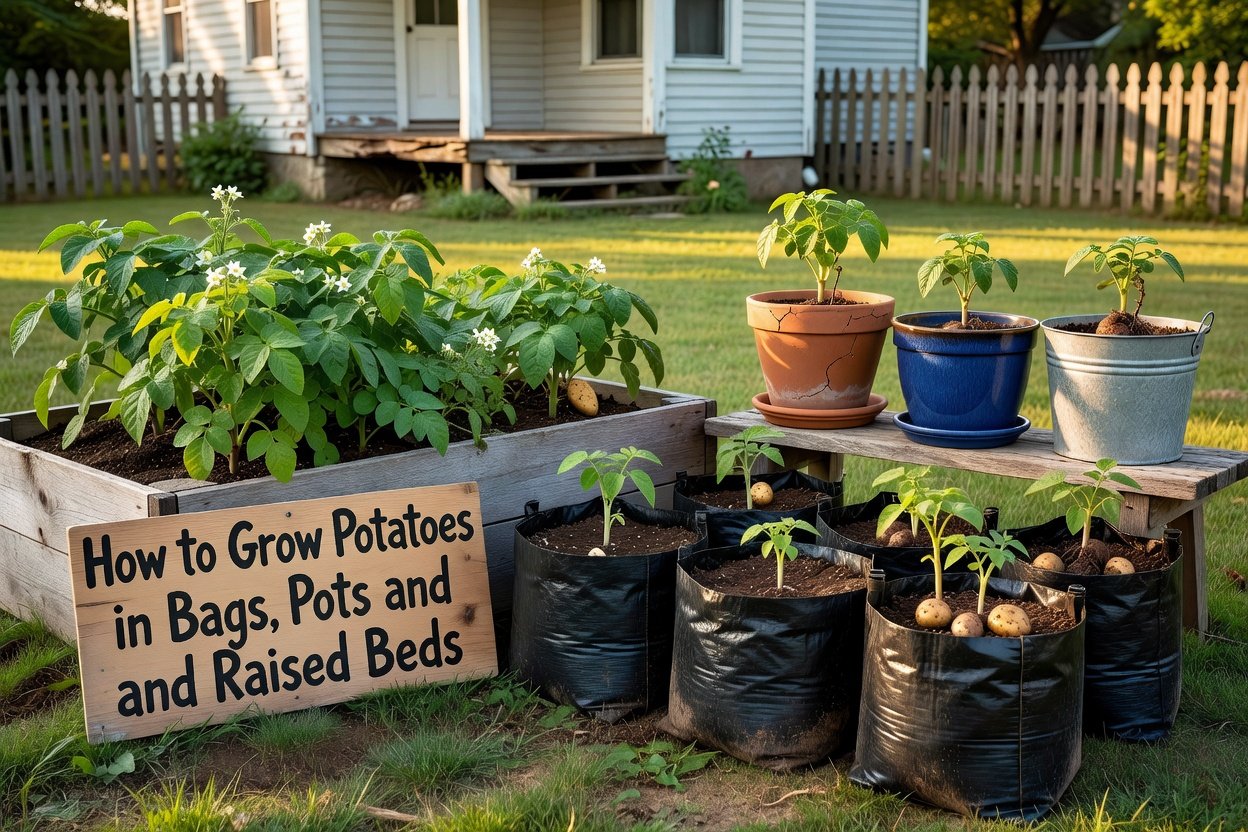
The simplest rule is this: bags and pots are best for early potatoes, while raised beds are better if you want a bigger crop.
Choose the Right Type of Potato First
The best potatoes for bags and pots are usually first earlies or second earlies. These crop earlier, need less time in the ground and are less likely to run into late summer blight.
First earlies are the classic “new potato” types. They’re usually planted from late March to April and harvested around 10 to 12 weeks later, depending on weather and variety. Good choices include ‘Rocket’, ‘Swift’, ‘Arran Pilot’ and ‘Charlotte’, though ‘Charlotte’ is often treated as a second early.
Second earlies take a little longer, usually around 13 to 16 weeks. They’re still a good choice for containers because they don’t need the long season of maincrop potatoes.
Maincrop potatoes can grow in large raised beds, but they’re less ideal for small bags. They need more time, more feeding, more water and more space. That’s the honest bit.
Bags, Pots or Raised Beds: Which Is Best?
Use the growing method that suits your space and how much attention you can give the crop. Potatoes are easy, but they’re thirsty once the leaves are growing strongly.
| Growing method | Best for | What works well | Watch out for |
|---|---|---|---|
| Potato bags | Patios, renters, small gardens | Easy to move, easy to harvest | Dry out quickly in warm weather |
| Large pots | Neat spaces, small batches | Good for first earlies and second earlies | Need proper drainage and deep compost |
| Raised beds | Bigger crops, mixed veg growing | More root space and steadier moisture | Takes up bed space for months |
| Open-bottom sacks | Temporary growing areas | Cheap and flexible | Can collapse or dry unevenly |
| Old compost bags | Budget growing | Reuses materials | Must have drainage holes |
If you’re new to growing potatoes, start with one or two bags of first earlies. You’ll learn more from a small, well-watered crop than from six neglected bags lined up behind the shed.
Buying and Chitting Seed Potatoes
Use certified seed potatoes rather than supermarket potatoes. Shop-bought potatoes may have been treated to stop sprouting, and they’re more likely to carry disease into your garden.
Seed potatoes are usually sold from late winter into spring. Once you have them, you can chit them, which means encouraging short, sturdy shoots before planting. Put them in an egg box or tray with the “rose” end facing upwards, then leave them somewhere cool, bright and frost-free.
Chitting is most useful for first earlies because it gives them a head start. You don’t need long, pale shoots. In fact, you don’t want them. Short greenish-purple shoots are better.
If you forget to chit, don’t panic. Potatoes still grow. Chitting helps, but it isn’t a magic spell.
When to Plant Potatoes in the UK
Most UK gardeners plant first earlies from late March into April, once the worst frosts have passed and the soil or compost is starting to warm. In colder areas, it’s sensible to wait a little longer.
Second earlies often go in during April. Maincrop potatoes are usually planted in April too, especially in open ground or raised beds. The exact timing depends on where you live. A sheltered garden in Cornwall is not the same as an exposed plot in North Yorkshire.
If frost is forecast after shoots appear, cover them with fleece, compost or straw. Young potato leaves are easily blackened by frost, although plants often recover if the damage isn’t too severe.
Don’t plant into freezing, waterlogged compost. Potatoes hate sitting cold and wet. They may rot before they properly start.
How to Grow Potatoes in Bags
Potato bags are handy because they give you depth without needing much ground space. A typical 35 to 40 litre potato bag is usually enough for two or three seed potatoes.
Start with around 10 to 15cm of peat-free multi-purpose compost in the bottom. Place the seed potatoes on top with the shoots facing upwards, then cover them with another 10cm or so of compost. Water gently.
As the shoots grow, add more compost around the stems, leaving the top leaves showing. This is called earthing up. In bags, it’s really just filling the bag gradually as the plant grows.
Here’s the non-obvious part: don’t obsess over filling the bag right to the top as fast as possible. If you bury too much leafy growth at once, you slow the plant down. Add compost in stages, and let the plant keep making strong leaves.
How to Grow Potatoes in Pots
A large pot works much like a potato bag, but it’s usually sturdier and better looking on a patio. Choose a pot at least 30cm deep and wide, though bigger is easier.
Drainage matters. Make sure there are holes in the base, then raise the pot slightly on feet or bricks so water can escape. Potatoes like moisture, but they don’t want stale compost.
Plant one or two seed potatoes in a large pot, depending on size. It’s tempting to cram more in, but overcrowding gives you smaller crops and makes watering harder.
A black plastic pot warms quickly in spring, which can help early growth. In summer, it can also heat up and dry out fast. That’s the trade-off.
How to Grow Potatoes in Raised Beds
Raised beds are better for gardeners who want a larger crop or who already grow vegetables in rotation. Potatoes enjoy the deeper root run and steadier moisture.
Plant seed potatoes around 10 to 15cm deep, with about 30cm between early potatoes and 35 to 45cm for larger types. Leave enough space between rows so you can earth up without burying neighbouring crops.
As the shoots grow, draw soil or compost up around the stems. This protects developing tubers from light, which can turn them green and bitter. Green potatoes should not be eaten.
Raised beds also make harvesting easier than heavy clay soil. Still, lift carefully with a fork so you don’t spear half the crop. We’ve all done it.
Watering: The Job That Makes or Breaks the Crop
Watering is the trap. Potatoes in bags and pots can look fine on top while the compost lower down is dry.
Once plants are growing well, check moisture regularly. Push a finger into the compost, or lift the bag slightly to feel the weight. Light bags usually need water.
The most important time for watering is when the plants start forming tubers, usually around flowering time. Dry compost at this stage can mean a disappointing crop of tiny potatoes.
Water deeply rather than giving a quick splash. In hot, windy weather, bags and pots may need watering every day. This is where container potatoes become less romantic.
Feeding Potatoes in Containers
Potatoes grown in bags and pots rely entirely on the compost you give them. Once they’re growing strongly, a liquid feed can help, especially if the compost is fairly light.
Use a balanced vegetable feed or a tomato feed once the plants are established. Follow the label rather than guessing. More feed won’t automatically mean more potatoes.
Raised bed potatoes often need less feeding if the bed has been topped up with compost or well-rotted organic matter. Avoid fresh manure, especially close to planting, as it can cause problems with scab and uneven growth.
The aim is steady growth, not enormous leafy plants. Too much lush top growth doesn’t always mean a better harvest underground.
Common Potato Problems
Slugs can be a nuisance, especially in raised beds and damp gardens. They often damage tubers late in the season, which is another reason early potatoes are useful. Lift them before slugs get too comfortable.
Potato blight is more likely in warm, damp weather and usually appears later in summer. Leaves develop dark patches, then the plant can collapse quickly. First earlies often avoid the worst of it because they’re harvested earlier.
Scab causes rough patches on the skins. It looks ugly, but the potato is often still usable once peeled. Dry conditions and alkaline soil can make it worse.
Green potatoes are different. If tubers are exposed to light, they turn green and should be discarded. Keep them covered as they grow.
When and How to Harvest
First earlies are usually ready when the plants flower, though not all varieties flower clearly. You can gently feel around in the compost after about 10 to 12 weeks to check tuber size.
For bags and pots, harvesting is easy. Tip the whole thing onto a sheet, tarpaulin or spare bit of ground, then rummage through the compost. Children love this bit. So do adults, if they’re honest.
For raised beds, lift carefully with a fork, starting away from the plant and working inwards. Harvest on a dry day if you can.
Eat first earlies soon after lifting. They don’t store like maincrop potatoes, and their flavour is best fresh.
Can You Reuse the Compost?
You can reuse potato compost, but not for potatoes, tomatoes, peppers or aubergines straight away. They’re all in the same plant family, and reusing compost for them can increase pest and disease risk.
Old potato compost is better spread as a soil improver around ornamental beds, mixed into the compost heap, or used for less hungry crops after refreshing it. Remove any tiny leftover potatoes first, or they’ll sprout where you don’t want them.
Don’t reuse compost from diseased plants. If blight or rot has been a problem, dispose of the affected plant material carefully and avoid spreading trouble around the garden.
This is one of the hidden costs of container growing: compost doesn’t last forever. You’ll need to refresh it each season.
A Simple Plan for Beginners
If you want the easiest start, grow first earlies in two potato bags. Plant two or three seed potatoes in each bag, use fresh peat-free compost, and put the bags somewhere sunny and easy to water.
Next 10 minutes: choose your growing method. If space is tight, use bags or large pots. If you want a bigger crop and have room, use a raised bed.
Today: buy certified seed potatoes and set them somewhere cool, bright and frost-free to chit. Check that you’ve got enough compost before planting day.
This week: prepare your bags, pots or raised bed. Make sure containers have drainage, decide where they’ll sit, and keep fleece ready in case late frost catches the first shoots.
Growing potatoes in bags, pots and raised beds is mostly about matching the crop to the space. Choose early varieties, give them enough compost, keep them watered, and don’t overcrowd them. Do that, and you’ll get the best kind of harvest: one you have to dig for.