A patchy lawn is usually trying to tell you something. Bare spots, yellow areas, moss, thin grass and muddy patches all have causes, and most of them are fixable once you stop treating the whole lawn as one problem.
This guide is for UK gardeners with ordinary back gardens, not bowling greens. If your lawn has bald patches after winter, dog urine marks, mossy corners, worn paths, or thin grass under trees, you’re in the right place.
The key is to diagnose the patch before you repair it. Throwing grass seed everywhere can help for a few weeks, but if the soil is compacted, shaded or waterlogged, the same patches will come back.
First, Work Out What Kind of Patch You Have
Different patches need different fixes. A dry, straw-coloured patch in July is not the same as a black, muddy patch near a gate in February.
Walk over the lawn slowly and look at where the damage sits. Is it under a tree? Along a route to the shed? Where the dog goes? In a dip where water collects? Near a children’s goal mouth? The position often gives away the cause.
Here’s a quick way to narrow it down:
| What the patch looks like | Likely cause | Best first fix |
|---|---|---|
| Thin grass with moss | Shade, poor drainage, low fertility | Scarify lightly, aerate, overseed with shade-tolerant grass |
| Bare muddy strip | Heavy foot traffic | Aerate, reseed, add stepping stones or change the route |
| Yellow circles or spots | Dog urine, drought, fertiliser scorch | Water well, remove dead grass, reseed if needed |
| Grass lifts like a carpet | Chafer grubs or leatherjackets | Check roots, encourage birds, consider biological control |
| Dry brown patches in summer | Drought, shallow roots, poor soil | Water deeply, raise mowing height, improve soil |
| Patchy after winter | Wet soil, wear, moss, disease | Rake out dead material, aerate, reseed in spring |
Most people want to start with seed. Start with the cause instead. It saves time.
Compacted Soil Is a Bigger Problem Than It Looks
Compaction is one of the most common reasons UK lawns become patchy. It happens when soil is pressed down by feet, furniture, pets, children playing, or regular mowing on the same route.
Grass roots need air as well as water. When soil becomes compacted, roots struggle to grow deeply, rain sits on the surface, and the lawn thins out. Moss and weeds then move into the gaps because they cope better with poor conditions.
You can test this with a garden fork. Push it into the patch. If it barely goes in, or the soil feels hard and smeary, compaction is probably part of the problem.
The fix is aeration. Push a garden fork into the lawn every 10–15cm, wiggle it slightly, then move along. For worse areas, use a hollow-tine aerator, which removes plugs of soil rather than just making holes.
It’s not glamorous work. It does help.
Shade Makes Grass Thinner
Grass needs light. In shaded gardens, especially under trees, beside fences or along north-facing boundaries, standard lawn grass often becomes thin and weak.
The mistake is trying to force a perfect lawn where grass doesn’t really want to grow. You can improve it, but you may not get a dense, sunny-lawn finish under a mature tree or beside a tall hedge.
Use a shade-tolerant lawn seed mix for these areas. These mixes usually contain finer grasses that cope better with lower light. Cut shaded grass slightly higher too, because longer blades collect more light.
Also look up. If overhanging branches are blocking a lot of light, careful pruning may help, provided the tree is yours and not protected by a Tree Preservation Order. If in doubt, check with your local council before cutting.
In my experience, the best fix for deep shade is sometimes not lawn repair at all. A border with ferns, hardy geraniums, hellebores or bark mulch can look much better than a sad patch of grass that needs rescuing every year.
Moss Means the Grass Is Struggling
Moss is not the real villain. It usually appears because the grass is already weak.
Common causes include shade, poor drainage, compacted soil, cutting too short, low fertility and wet winter conditions. That’s why moss is so common in British lawns. Our weather gives it plenty of chances.
You can rake moss out with a spring-tine rake or use a scarifier if the lawn is large. Do this in spring or early autumn when the grass is growing well. Don’t strip a weak lawn in the middle of winter and expect it to recover quickly.
After removing moss, overseed the gaps. If you leave bare soil, moss and weeds will return. Add a light top dressing of lawn soil or fine compost to help seed settle, then keep it moist while it germinates.
The surprise is that killing moss without fixing the conditions often makes the lawn look worse. You remove the green moss, reveal bare soil, and then wonder why the lawn looks even patchier.
Dog Urine Patches Need Fast Dilution
Dog urine can scorch grass, especially from female dogs because they often wee in one concentrated spot. The result is a yellow or brown patch, sometimes with a dark green ring around it.
The best immediate fix is water. If you see it happen, drench the area with a watering can to dilute the urine. Once the grass is dead, watering won’t bring it back, but it can stop the patch getting worse.
For dead spots, rake out the dry grass, loosen the soil, add a little fresh topsoil if needed, then reseed. Keep dogs off the repaired area until the new grass has rooted properly.
Be wary of supplements or “lawn-saving” dog products unless your vet has advised them. Your dog’s health matters more than the lawn.
A practical option is to train your dog to use one gravelled or mulched area of the garden. Not everyone manages it, but it can reduce random spots across the lawn.
Pests Can Make Grass Lift Away
If a patch of lawn lifts easily, almost like loose turf, check the roots. Chafer grubs and leatherjackets can feed below the surface, weakening the grass until birds, foxes or badgers pull it up looking for food.
Leatherjackets are crane fly larvae. Chafer grubs are beetle larvae. Both are common lawn pests in the UK, although damage varies a lot by year and area.
Pull back a damaged patch and look in the top few centimetres of soil. Leatherjackets are grey-brown and legless. Chafer grubs are creamy-white and often curled into a C-shape.
Biological controls using nematodes are available, but timing matters. They need suitable soil temperature and moisture, so follow the packet instructions carefully. If damage is minor, the lawn may recover with reseeding and better care.
Don’t assume every brown patch is pests. Most aren’t.
Mowing Too Short Makes Patchiness Worse
Cutting the lawn too short weakens the grass. It also exposes soil, encourages moss and weeds, and makes the lawn dry out faster in warm weather.
For a normal family lawn, aim to keep grass around 4–5cm high through much of the growing season. In dry spells, raise the mower blades. Taller grass shades the soil and helps roots cope.
Avoid cutting more than a third of the grass height at once. If the lawn has got long, bring it down gradually over a couple of cuts. Scalping it may look tidy for a day, then ugly for weeks.
Sharp mower blades matter too. Blunt blades tear the grass rather than cutting it cleanly, leaving pale ragged tips. If the whole lawn looks tired after mowing, check the blade.
How to Repair Bare Patches Properly
Patch repair is simple, but it needs decent timing. The best times to repair a UK lawn are usually spring and early autumn, when the soil is moist and warm enough for seed to germinate.
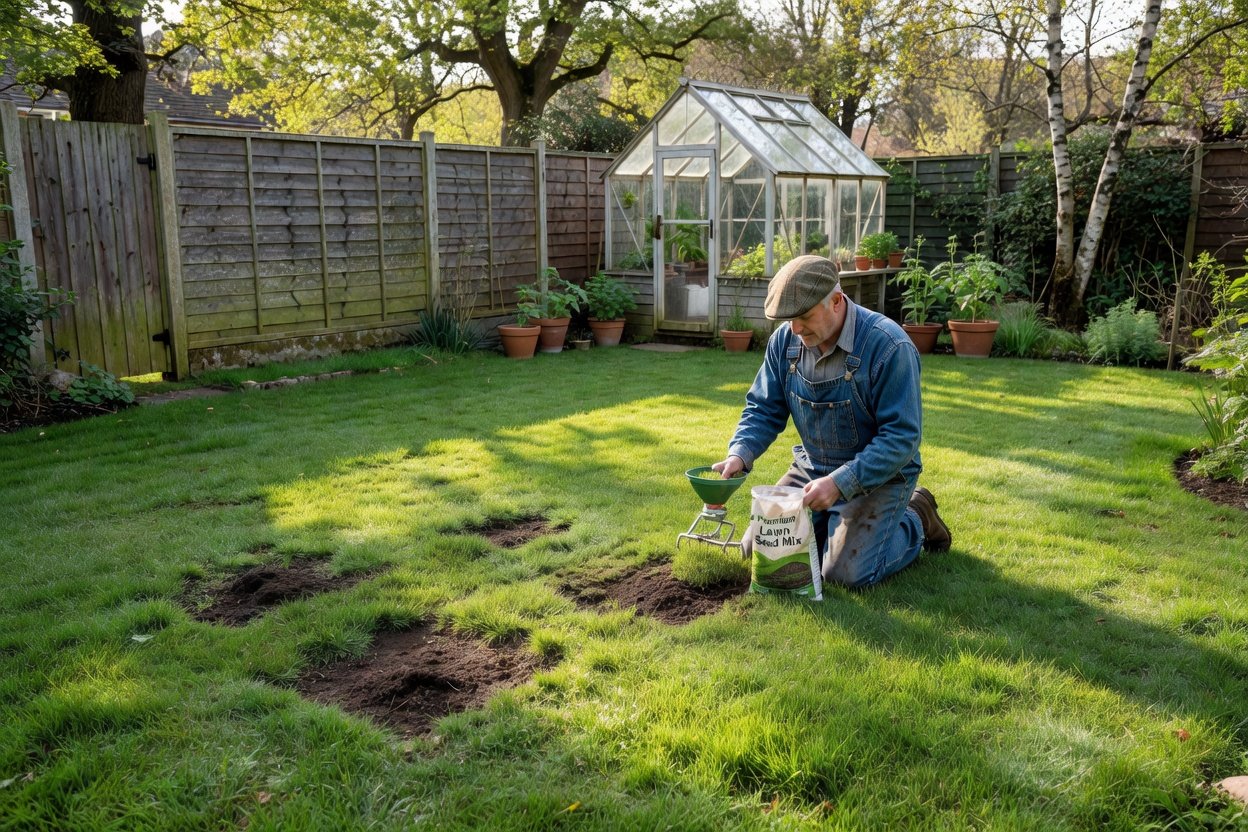
Rake out dead grass, moss and debris first. Loosen the top few centimetres of soil with a fork or hand cultivator. If the soil is poor, add a thin layer of lawn top dressing or fine topsoil.
Scatter grass seed evenly over the patch, then press it down gently so it has good contact with the soil. Birds can be a nuisance, so cover with netting, fleece or a light sprinkling of compost if needed.
Water with a fine rose and keep the area damp until the grass has established. Don’t flood it. Don’t let it dry out either.
The high-friction reality is that repaired patches need protection. If children, pets or delivery drivers keep walking over the new seed, it won’t stand a chance.
Overseeding Helps Thin Lawns
If the lawn is thin all over, overseeding is better than repairing individual spots. It thickens the grass and helps crowd out weeds.
Mow the lawn first, then rake out loose material. Aerate compacted areas, spread seed evenly, and top dress lightly if the surface is uneven or the soil is poor. Water if rain doesn’t arrive.
Choose the right seed. A hard-wearing family lawn mix suits play areas. A shade mix suits darker corners. A fine ornamental mix is not ideal for a lawn that gets football, dogs and garden chairs.
Keep off the lawn as much as possible while the seed germinates. That’s the annoying bit. You may need temporary string, canes or a polite family ban for a couple of weeks.
Feeding Can Help, But Don’t Overdo It
A hungry lawn becomes thin, pale and weak. Feeding can help it recover, especially after scarifying or heavy wear.
Use a lawn feed suited to the season. Spring and summer feeds encourage growth. Autumn lawn feeds are usually lower in nitrogen and support root strength before winter.
Follow the instructions carefully. Too much fertiliser can scorch the lawn and create more patches than you started with. Apply evenly, ideally before rain or water it in as directed.
If you prefer a lower-input lawn, that’s fine. You don’t have to feed constantly. But if you remove lots of grass clippings every time you mow, nutrients are leaving the lawn and will eventually need replacing.
When to Stop Fighting the Lawn
Some patches are not worth endless repair. Deep shade, boggy corners, steep slopes and narrow routes to bins or sheds often defeat grass year after year.
In those areas, change the surface or planting. Use stepping stones through worn routes. Turn damp corners into planted beds. Replace deep shade lawn with woodland-style planting, bark paths or ground cover.
This is not giving up. It’s good gardening.
A lawn should suit how the garden is used. If the children always cut across the same corner, design for that route rather than reseeding it every spring.
A Simple Patchy Lawn Recovery Plan
A better lawn starts with diagnosis, not panic-buying grass seed.
Next 10 minutes: walk the lawn and mark the patch types. Look for shade, wear, moss, dog spots, dry soil, poor drainage or signs of pests.
Today: fix the biggest cause first. Aerate compacted areas, rake out moss, raise the mower height, or fence off a worn repair patch so it gets a chance.
This week: reseed bare areas if the season is right, overseed thin grass, water new seed carefully, and keep people and pets off repaired patches until the new grass is growing strongly.
Your lawn doesn’t need to be flawless to look good. Most patchy lawns improve quickly when you match the repair to the cause: aerate hard soil, use the right seed, stop scalping the grass, and rethink areas where lawn was never the best answer. Fix the conditions first, and the grass has a much better chance of filling in.