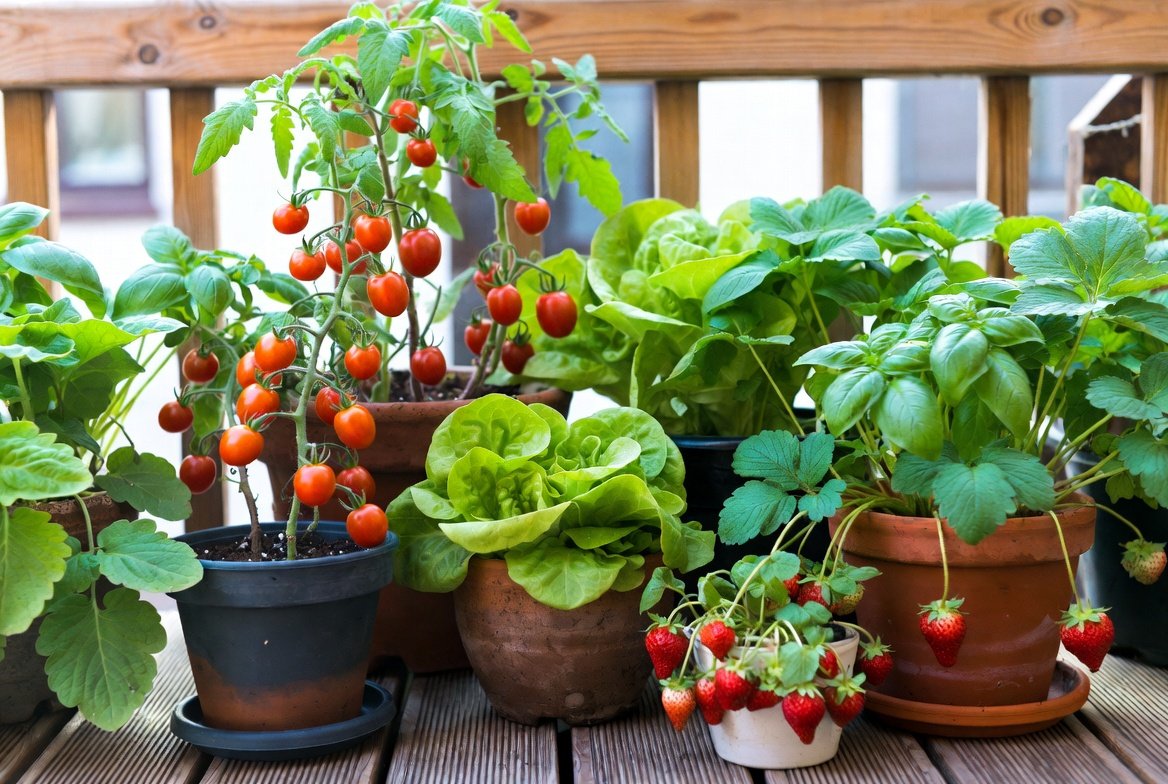
You do not need an allotment to grow your own food. A sunny patch of paving or a small balcony is enough, provided you pick the right plants. The mistake most people make is trying to grow space-hungry veg like carrots or maincrop potatoes in a pot. You will spend £10 on compost to harvest £2 worth of spuds. If you are looking for edible plants for balcony spaces that actually give you a decent return for your effort, you have to be ruthless. This is for anyone with a tiny outdoor space who wants fresh produce without the hassle. The secret is choosing compact varieties, using cut-and-come-again crops, and accepting that pots need more water and food than you think.
The Container Rules
Successful container vegetable gardening is about matching the pot to the root. Do not use garden soil; it compacts and dries into a brick. Use peat-free multi-purpose compost. When choosing edible plants for balcony spaces, remember the root depth. As a rule, if you want to grow something that produces fruit (tomatoes, chillies), you need a pot the size of a dinner plate and just as deep. For leafy salads, 15cm of depth is plenty. And remember the wind. Balconies are windy, and wind dries pots out faster than sun. If your space is exposed, group pots together to create a windbreak.
Salad Leaves: The Quickest Win
If you only grow one thing, make it cut-and-come-again salad. These are mixed leaf lettuces that you harvest by snipping off the outer leaves, leaving the centre to regrow. You can get three or four cuts from one pot. They are shallow-rooted, so they grow in window boxes or old recycling crates with holes drilled in the bottom. They also tolerate partial shade, making them ideal for north-facing balconies.
| Condition | Best Salad Choice |
|---|---|
| Sunny, hot spot | Rocket, Mustard leaves |
| Partial shade | Lettuce mix, Spinach |
| Window box | Cress, Radish (for pods) |
Tomatoes: Pick the Right Type
Do not buy a cordon (indeterminate) tomato plant for a balcony. They grow tall, need tall canes, and need side-shooting. You want a bush (determinate) variety. Patio tomatoes like ‘Tumbler’ or ‘Tiny Tim’ are bred to trail over the side of a pot or hanging basket. They stay compact, they do not need pinching out, and they crop heavily. They need a sunny, sheltered spot and a big pot—at least 30cm diameter. Keep them watered consistently; erratic watering causes the fruit to split.
Herbs: The Low Maintenance Option
Growing herbs in pots is the easiest way to add flavour to your cooking, but treat mint and basil differently. Mint is a thug. Never plant it in the same pot as other herbs; it will starve them of water and space. Give it its own pot, or it will take over. Basil hates the cold. Do not put it outside until June, and keep it in the warmest, most sheltered spot you have. Chives, parsley, and rosemary are tough and will happily sit outside in a mixed pot from May onwards.
Feeding and Watering: The Reality
Pots are artificial environments. The compost holds very little food. After six weeks, the plant has used it all. If you want tomatoes or chillies to produce fruit, you must feed them weekly with a liquid tomato fertiliser once the first flowers appear. Watering is the real job in container vegetable gardening. In July, a pot in full sun might need watering twice a day. If you go away for the weekend, your plants will die. In my experience, a simple automated drip system connected to a tap timer is the best £30 you will spend if you have more than five pots. It saves the holiday heartbreak.
Conclusion
You now know that growing food in small spaces is about choosing the right plants and keeping on top of the water. In the next 10 minutes: check how much sun your balcony gets before you buy anything. Today: buy a bag of multi-purpose compost and a packet of cut-and-come-again seeds. This week: pot up your salad leaves and move your mint out of the shared herb planter before it takes over. Stop trying to grow potatoes in a bucket and start growing what actually works.