Growing your own garlic and onions feels like a rite of passage. It seems simple: stick a bulb in the ground, wait, and harvest. But when you try to grow garlic uk weather often has other ideas. Our wet winters turn heavy soil into a swamp, and alliums hate having wet feet. If your garlic rotted in the ground last year, or your onions stayed the size of marbles, it wasn’t your fault. It was probably the drainage. This is for anyone who wants to fill a string bag with homegrown bulbs without the disappointment of digging up mush. The secret is matching the right variety to our climate and sorting the soil before you plant.
The Wet Feet Problem
Alliums need cold to grow properly. Garlic specifically requires a cold period—vernalisation—to split into separate cloves. But there is a tension. They need the cold, but they hate the wet. If water sits around the roots for days on end, the basal plate rots and the bulb dissolves from the bottom up. This is the single biggest reason garlic fails in the UK. It is not the frost that kills them; it is the waterlogging. If your soil is heavy clay, you cannot just plant and hope. You have to fix the drainage first, or plant in raised beds.
Garlic: Hardneck vs Softneck
If you want to grow garlic uk soils will support, you must pick the right type. Supermarket garlic is usually softneck, grown in warmer climates like Spain or China. It does not like our cold, wet winters and often rots or fails to bulb. You need to buy specific autumn planting garlic from a seed merchant. Hardneck varieties, like ‘Solent Wight’, are hardy and produce a stiff central stem. They handle the cold well and produce large, easy-to-peel cloves. Softneck varieties, like ‘Germidour’, store for longer but can be less reliable in a harsh winter.
| Feature | Hardneck (e.g., Solent Wight) | Softneck (e.g., Germidour) |
|---|---|---|
| Cold Hardiness | Excellent | Moderate |
| Clove Size | Large, easy to peel | Smaller, more numerous |
| Storage | 4–6 months | 8–10 months |
| Stem | Stiff, produces scape | Soft, plaitable |
Onions: Sets vs Seeds
Onions are more forgiving than garlic, but the timing still matters. You can grow them from seed or sets. Sets are small, immature bulbs grown the previous year. They are the easiest option because they have a head start and are less prone to onion fly. Planting onion sets in autumn gives you an earlier harvest the following summer. If you want to grow from seed, sow them in modules indoors in late winter and plant out in spring. Seeds offer more variety, but sets are the safer bet for a reliable crop in a British summer.
Planting and Spacing
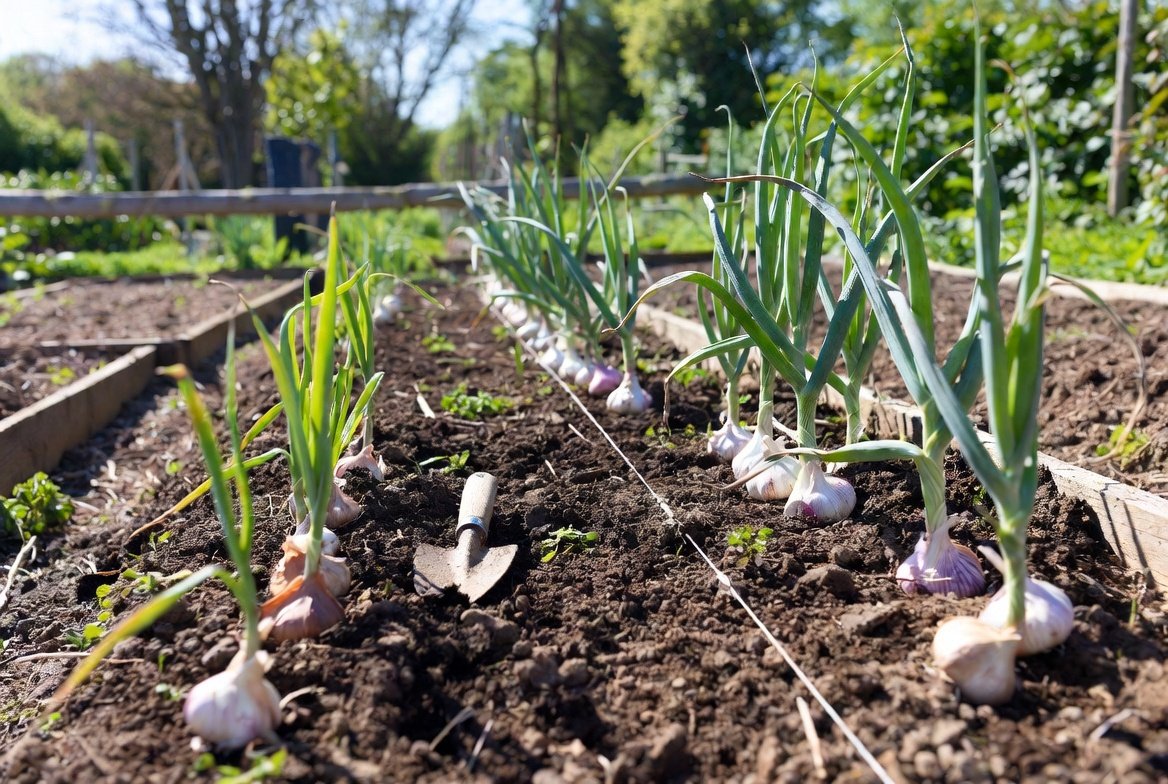
Do not plant deep. This is a common mistake. Push a garlic clove into the soil so the tip is just below the surface—about 2.5cm deep is enough. If you plant it deep in heavy soil, it will rot before it roots. Space them 15cm apart in rows 30cm apart. For planting onion sets, push them in gently until the tip is just showing. Birds love pulling them out, so net the bed for the first few weeks until the roots anchor them down. Keep the area weed-free; alliums have shallow roots and cannot compete with weeds for water or nutrients.
The Harvest and the Cure
When garlic leaves start to yellow and fold over, it is time to lift them. Do not wait until they are completely brown, or the bulbs will split. For onions, wait until the tops fall over and the neck feels dry. Lift them on a dry day. Do not leave them in the sun to bake, but do not leave them out in the rain either. The key to storage is curing. Lay the bulbs out in a single layer in a dry, airy shed or greenhouse for two to three weeks until the skins are papery and the stems are brittle. If you have heavy soil, improving the raised bed soil with plenty of grit and compost before you plant is the only way to guarantee this final step works.
Conclusion
You now know that the biggest threat to your crop isn’t pests or frost, but water. In the next 10 minutes: go and check where water pools in your garden after rain. That is not the place for garlic. Today: order hardneck garlic bulbs like ‘Solent Wight’ from a UK supplier, not the supermarket. This week: if your soil is clay, build a raised bed or incorporate generous amounts of horticultural grit to improve drainage before planting. In my experience, sorting the soil before you plant is the difference between a string of fat bulbs and a handful of mush.