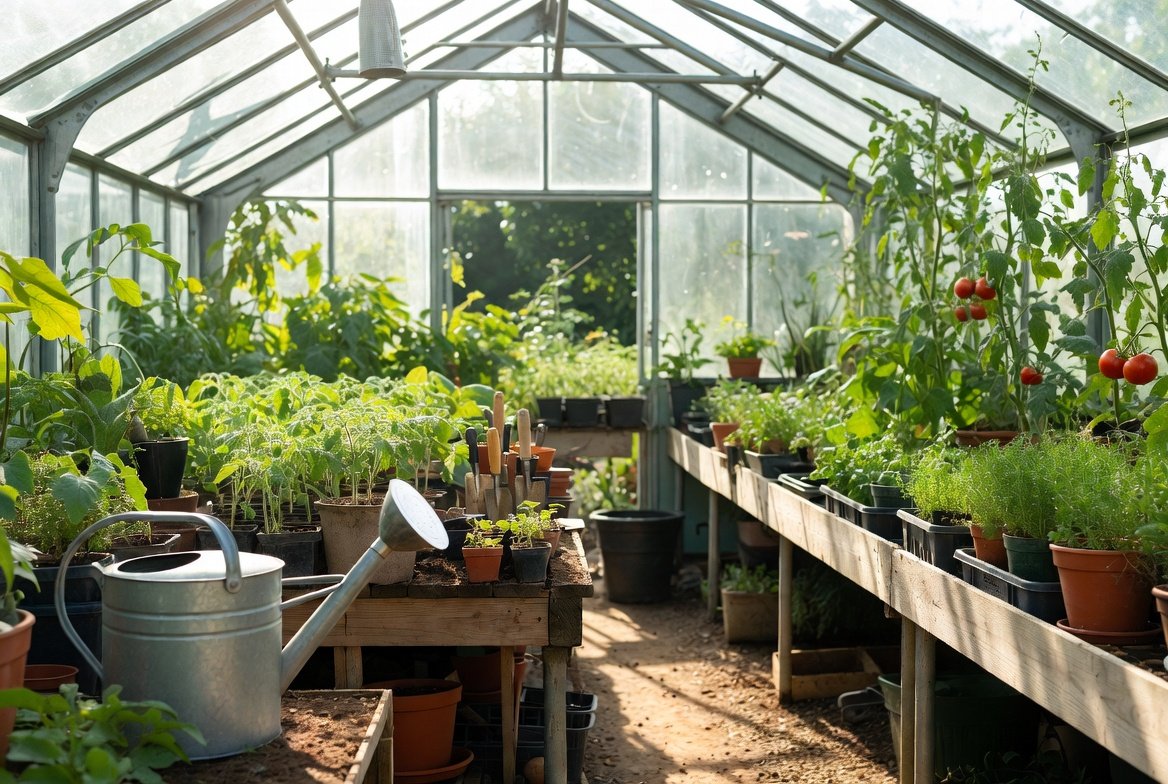
Buying a greenhouse feels like a milestone. You imagine picking tomatoes in the rain or growing citrus in December. The reality is a bit more stubborn. A greenhouse is not a tropical room; it is a tool for manipulating the British climate. And in the UK, that climate is mostly wet, grey, and erratic. If you just shut the door and hope for the best, you will either fry your plants in May or let them rot in July. This is for anyone starting greenhouse gardening for beginners who wants to avoid the common traps. Whether you have a sprawling 10x8ft cedar house or a small 6x4ft polycarbonate unit, the rules of climate control are the same. The secret is managing air flow, not just temperature.
The Big Myth: Heat vs. Light
The biggest mistake beginners make is assuming a greenhouse is primarily for keeping plants warm in winter. It is not. An unheated greenhouse drops to near-ambient temperature the moment the sun goes down. Glass is a terrible insulator. What the glass actually does is trap solar radiation during the day, creating a temperature spike that can be 15°C higher than outside. In May, this furnace effect will cook tomato seedlings in hours. Your primary job is not heating the space; it is cooling it and keeping the air moving. If you get the ventilation right, the heating is secondary.
The Critical Job: Ventilation
Stagnant air is the enemy. It encourages botrytis (grey mould) and damping off, which will kill seedlings overnight. You must have air flowing through the structure. Roof vents are essential. Open them when the temperature hits about 18°C. If you are out at work all day, auto-vent openers are not a luxury; they are a necessity. They use a wax cylinder that expands with heat to push the vent open automatically, costing around £20–£30 each. Proper greenhouse ventilation also requires low-level air intake. Open the door or install louvered vents at the base to draw cool air in while hot air escapes from the top.
Watering Right: Avoiding the Rot
Watering in a greenhouse is different from watering outdoors. The plants are dependent on you, but the soil in bags or pots doesn’t dry out as fast as you think. Overwatering is the fastest way to kill a plant in a pot. The surface might look dry, but the roots could be sitting in mud. Push your finger into the compost; if it’s damp a knuckle down, walk away. When growing in a greenhouse, water in the morning if possible. This gives the leaves time to dry before the temperature drops at night. Wet leaves and cold nights are a recipe for fungal disease.
The Real Seasons: What to Actually Grow
A greenhouse shifts the seasons, but it doesn’t erase them. You gain a month in spring and extend the autumn, but winter is still a dead zone without expensive heating. In greenhouse gardening for beginners, the goal is usually to get a head start, not to grow bananas in December. Use the space for starting seeds early (February/March), growing heat-loving crops like tomatoes, chillies, and aubergines in summer, and overwintering hardy salads like rocket and lamb’s lettuce.
| Season | Main Use | Key Crops |
|---|---|---|
| Spring | Seed starting, hardening off | Tomatoes, chillies, early salads |
| Summer | Heat-loving crops | Aubergines, cucumbers, melons |
| Autumn | Extending harvests | Late salads, herbs, ripening green tomatoes |
| Winter | Overwintering (unheated greenhouse) | Hardy salads, protecting dormant pots |
The Essentials: Staging and Insulation
Before you fill the space with pots, sort the infrastructure. Greenhouse staging gives you a waist-high work surface and keeps seedlings away from the cold floor. Choose slatted staging so water can drain through and air can circulate. If you have no power supply, insulating with bubble wrap in winter can save a few degrees of frost damage, but it blocks light and reduces greenhouse ventilation, so remove it in spring. Paraffin heaters are an option for keeping frost at bay, but they create condensation and need constant refilling. In my experience, a well-ventilated greenhouse with good staging and realistic expectations is far more productive than a heated, stuffy one.
Conclusion
You now know that a greenhouse is a tool for managing air and light, not just a warm room for winter. In the next 10 minutes: check if your greenhouse has roof vents. If it only has a door, you need to plan for an auto-vent. Today: buy a maximum-minimum thermometer so you actually know how hot and cold it gets in there. This week: clear out the clutter and set up a sturdy staging area so you have a clean, airy workspace ready for spring sowing. Stop worrying about heating the space and focus on the joy of growing in a greenhouse on your own terms.