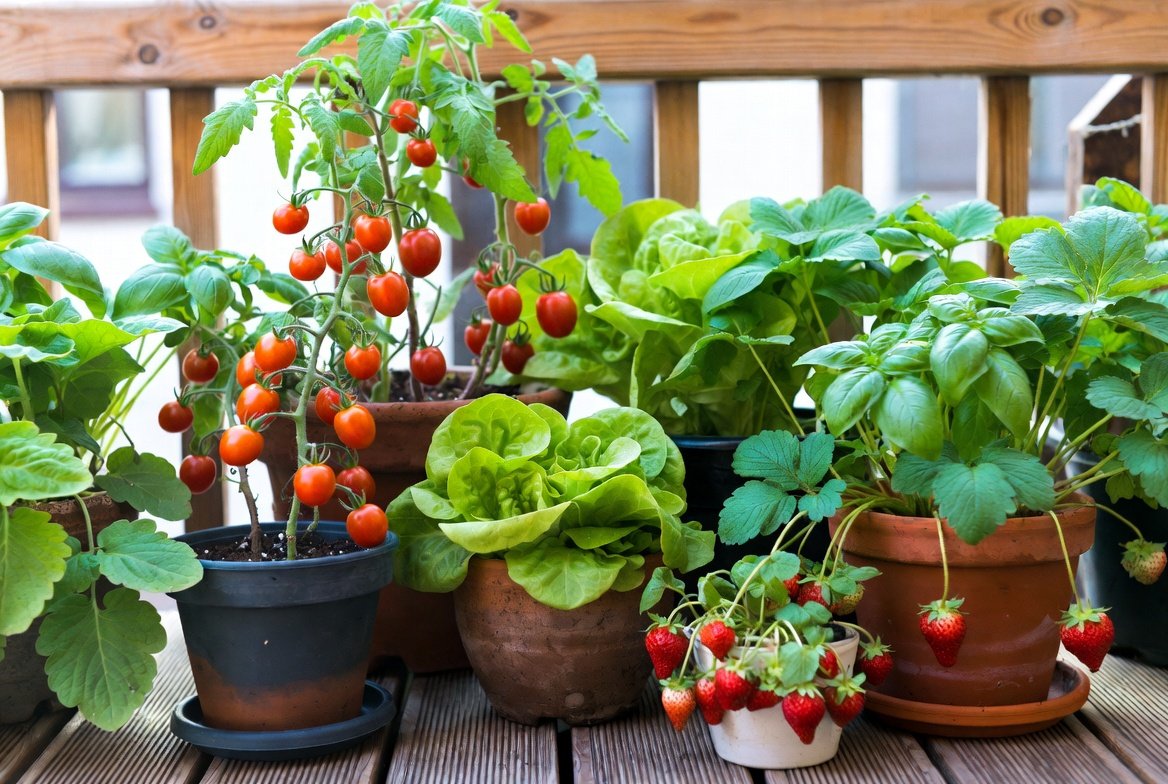
Growing strawberries in pots is the easiest way to beat slugs and get clean, undamaged fruit. In a British summer, ground-grown strawberries often sit in damp soil, attracting mould and every mollusc in the parish. Lift them into a container and the drainage improves, the fruit stays clean, and picking is far easier on your back.
This guide is for gardeners with patios, balconies, or small back gardens who want a decent bowl of homegrown fruit without dedicating a whole veg patch to it. You don’t need much room. You do need the right compost, a steady hand with the watering can, and a bit of honesty about how much attention containers demand in July.
The real secret isn’t the pot. It’s the variety, the planting depth, and the feeding routine.
Why Containers Beat Open Ground
Slugs are the obvious reason to lift strawberries off the soil. But drainage matters just as much. Strawberries hate sitting in cold, wet compost. Their roots rot, and the fruit quickly develops grey mould (botrytis), which turns your hard-won berries into fuzzy grey sponges.
In pots and baskets, you control the compost mix. You can guarantee it drains freely. You can also move the plants under cover if the rain refuses to stop, which is a godsend in a wet UK summer.
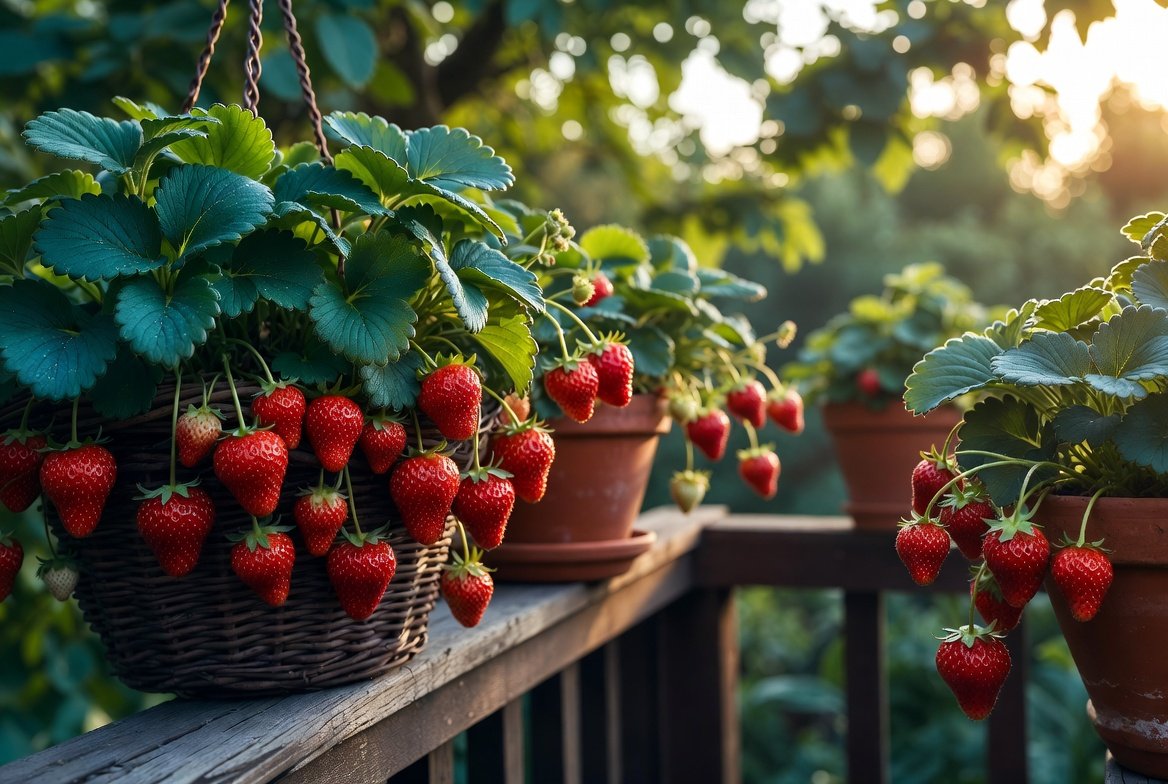
Hanging baskets are particularly good. The fruit trails over the sides, completely clear of the soil and most pests. Just remember that baskets are also exposed to wind. On a windy balcony or an exposed patio, a heavy basket swinging about will stress the plants and dry out the compost in hours. Sheltered spots are better for strawberry hanging baskets.
Choose the Right Variety for Your Space
Not all strawberries are the same. Some crop once in early summer; others fruit repeatedly from July until the first frosts. For containers, the best strawberry varieties UK gardeners can grow are often the everbearing (or day-neutral) types, because they give you a steady supply of fruit over months rather than a single glut.
‘Mara des Bois’ is a superb everbearing variety. It has incredible flavour—proper old-school strawberry taste—and fruits heavily from mid-summer onwards. ‘Albion’ is another reliable everbearer with large, firm berries that resist rot well.
If you prefer a big early crop, ‘Cambridge Favourite’ is a traditional Junebearer that does well in pots. It’s tough, reliable, and freezes beautifully if you end up with too many at once.
Avoid buying unnamed cheap plants from the supermarket in late spring. They are often exhausted by the time you get them home. Buy cold-stored runners from a reputable nursery in spring or autumn.
Pots, Baskets or Towers?
The container you choose changes how you water and feed. Those multi-hole strawberry towers look clever, but they are a trap for beginners. The top dries out while the bottom stays soggy. Standard pots or baskets are much easier to manage.
| Container type | Best for | Number of plants | Watering effort |
|---|---|---|---|
| Standard patio pot (30–35cm) | Beginners, heavy crops | 3 plants | Daily in summer |
| Hanging basket (35–40cm) | Patios, balconies, slug-free fruit | 4–5 plants | Daily, sometimes twice daily |
| Window box | Balcony rails | Every 15cm | Daily |
| Strawberry tower | Experienced waterers only | Varies | Very high, uneven |
When learning how to plant strawberries, the planting depth is the most critical detail. The crown—the thick bit where the roots meet the stems—must sit exactly at soil level. Bury it, and the crown rots. Leave it exposed, and the roots dry out. The margin for error is millimetres. Firm the compost gently around the roots and water them in well.
The Relentless Reality of Watering and Feeding
Container strawberries rely entirely on you for food and water. This is where the romance of homegrown fruit meets the reality of summer holidays.
In warm, windy weather, hanging baskets can dry out in a few hours. If the compost dries out completely, the plants will shed their flowers and fruit to survive. If you go away for a weekend in July, you will need someone to water them.
Use a good peat-free multi-purpose compost mixed with about 20% perlite or grit to ensure drainage. Water when the top few centimetres of compost feel dry, and water thoroughly until it runs from the base.
Feeding is the difference between a few sad berries and a proper crop. Once the first flowers appear, start feeding every 10 to 14 days with a high-potash liquid tomato feed. This is standard strawberry plant care. Potash drives fruit production. A general-purpose feed will just give you lots of leaves and very few strawberries.
Protecting the Fruit from Everything Else
Birds, mice, and wasps all find strawberries irresistible. If you have ever watched a blackbird take the one ripe berry you were saving for tomorrow, you understand the frustration.
Netting is the simplest defence. Drape fine netting over the plants as soon as the fruit starts to change colour, and secure it at the base so birds can’t get trapped underneath. If wasps are a problem, hang a wasp trap nearby.
Grey mould is the main disease risk in damp weather. If you see fuzzy grey patches on the fruit or leaves, remove them immediately. Space plants well in their containers so air can circulate, and always water the base of the plant, not the leaves and fruit.
Managing Runners
Most strawberry plants produce long stems called runners, with tiny baby plants at the end. In the first year, it is best to cut these off. It feels harsh, but the plant needs all its energy to establish roots and produce fruit. If you leave the runners on, you will get a tangled mess and very small berries.
If you want to propagate new plants for free, peg one or two runners down into small pots of compost pinned to the parent plant. Once rooted, cut the stem and you have a new plant. Do this in midsummer, and you will have fresh, vigorous plants for next year.
Strawberry plants are usually at their most productive in their second and third years. After that, yields drop. Replace them regularly to keep your crops high.
A Simple Plan for Your First Crop
Next 10 minutes: Check where you will put the pots or baskets. Look for a sunny, sheltered spot that is easy to reach with a watering can.
Today: Order your plants. Choose an everbearing variety like ‘Mara des Bois’ if you want fruit all summer, or ‘Cambridge Favourite’ for a big early crop.
This week: Buy your pots, peat-free compost, perlite, and high-potash feed. Plant the crowns exactly at soil level, water them in, and start a routine. Do not let them dry out.
Growing strawberries in containers is not a plant-and-forget job. It takes a bit of daily attention, especially in summer. But when you pick a warm, sun-ripened berry from your own patio, the effort feels entirely worth it.