Pruning roses feels more mysterious than it really is. Most mistakes come from treating every rose the same, then wondering why one plant flowers beautifully whilst another sulks for a year.
This guide is for UK gardeners with garden roses, shrub roses, patio roses, climbers or ramblers. It’s not aimed at specialist exhibitors trying to win show benches. The goal here is simple: healthier plants, better shape, more flowers, and fewer scratched arms.
The short version is this: most bush and shrub roses are pruned in late winter or early spring, while rambling roses are usually pruned after flowering in summer. Climbers sit somewhere in between. Once you know which type you have, the job becomes much easier.
The Best Time to Prune Roses in the UK
Most repeat-flowering bush roses should be pruned between February and March in the UK. In milder southern areas, February is often fine. In colder parts of northern England, Scotland, Wales and exposed gardens, March is usually safer.
A good sign is when the buds begin to swell but the plant hasn’t properly burst into leaf. Avoid pruning during a hard frost. A light frost won’t usually ruin everything, but cutting into frozen stems can damage the plant and leave fresh cuts exposed at the worst moment.
Here’s the bit many gardeners miss: timing depends on rose type, not just the calendar. Hybrid teas, floribundas and many modern shrub roses are happy with late winter pruning. Rambling roses are different because many flower on stems made the previous year. Cut those stems hard in February and you may remove most of the coming summer’s flowers.
Quick Rose Pruning Calendar
Use this as a starting point, then adjust for your local weather and the rose’s growth.
| Rose type | Best pruning time in the UK | How hard to prune | Main aim |
|---|---|---|---|
| Hybrid tea roses | February to March | Fairly hard | Strong new flowering stems |
| Floribunda roses | February to March | Moderate | Plenty of flowering shoots |
| Modern shrub roses | February to March | Light to moderate | Shape, health and repeat flowers |
| Patio and miniature roses | February to March | Light to moderate | Tidy compact growth |
| Climbing roses | Late autumn to late winter | Moderate | Train main stems, shorten side shoots |
| Rambling roses | After flowering, usually July to August | Selective | Remove old wood, keep new flowering stems |
| Newly planted roses | First spring after planting | Light shaping only | Build a strong framework |
If you’re not sure what rose you have, look at how it grows. A stiff, upright rose in a border is often a bush rose. A rose trained against a wall or arch with long, structured stems is likely a climber. A very vigorous rose that throws out long, flexible stems and flowers in one big flush is often a rambler.
What You Need Before You Start
You don’t need much kit, but sharp secateurs make a big difference. Blunt blades crush stems instead of cutting them cleanly, which leaves ragged wounds that heal more slowly.
Use clean, sharp secateurs for most stems, loppers for thicker old wood, and thick gloves for your own sanity. A pruning saw is useful for old climbing or shrub roses with woody stems at the base. Clean tools before you start, especially if you’ve recently cut diseased plants.
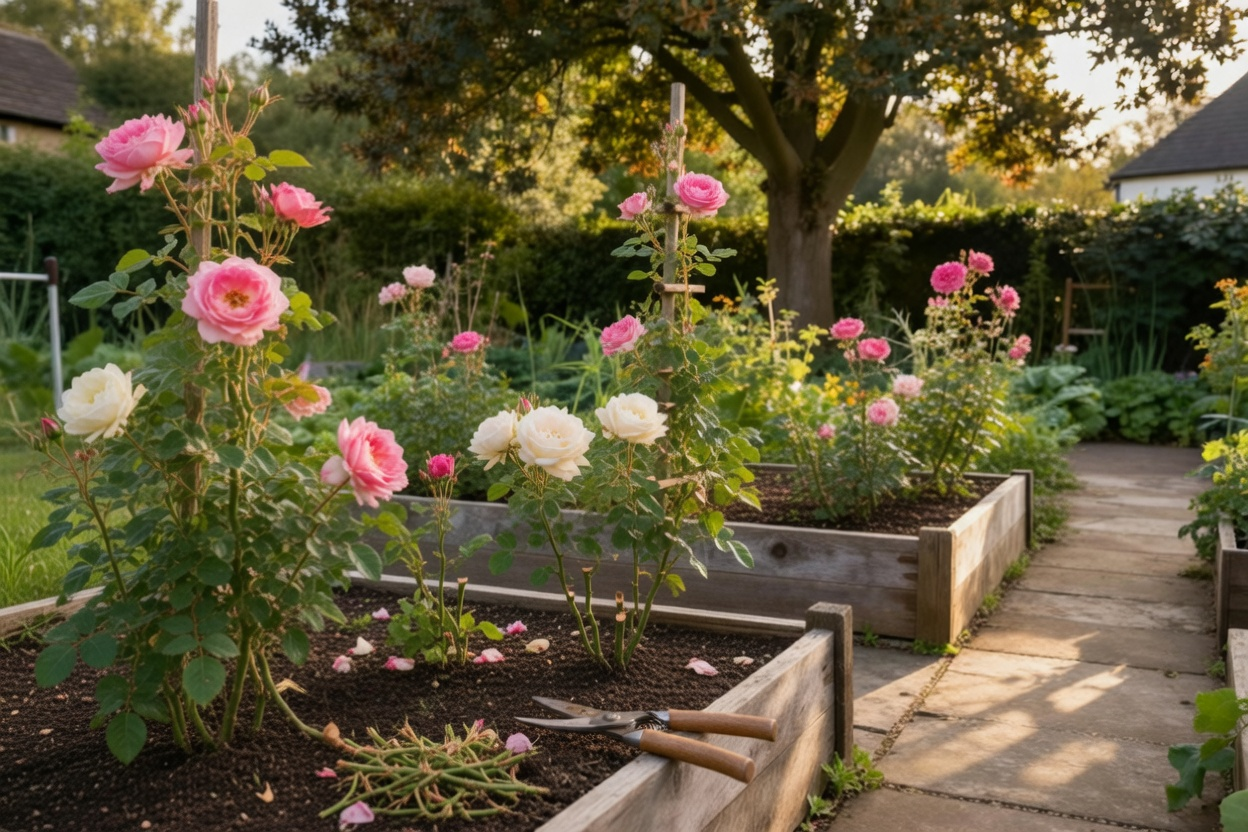
Make each cut just above an outward-facing bud where possible. This encourages growth away from the centre of the plant, which helps air move through the rose. Better airflow means fewer problems with black spot and mildew, both of which are common in damp British weather.
Cut at a slight angle so water runs off the cut. Don’t obsess over the angle. A clean cut in roughly the right place is far better than standing there for ten minutes trying to perform surgery on a rose bush.
How to Prune Hybrid Tea and Floribunda Roses
Hybrid tea roses are usually pruned harder than floribundas. They produce large flowers on strong stems, so the aim is to encourage a smaller number of vigorous shoots.
Start by removing dead, diseased, damaged or crossing stems. Then cut the remaining strong stems back to around 15 to 30cm from the ground, depending on the plant’s strength. A weak plant should be left a little taller so it has more energy-producing wood.
Floribundas produce clusters of flowers, so they usually need a slightly lighter hand. Remove the unhealthy and crowded stems first, then reduce the remaining stems by about a third to a half. Keep a balanced, open shape rather than cutting everything to the same height.
In my experience, beginners often prune too timidly with bush roses. Roses are tougher than they look. If the plant is established and healthy, a proper late-winter prune usually encourages better growth, not worse.
How to Prune Shrub, English and Patio Roses
Modern shrub roses and English roses usually need shaping rather than severe cutting back. They’re grown for a natural, rounded habit, so a hard prune can make them look awkward and reduce their charm.
Remove dead, diseased and spindly growth first. Then reduce the main stems by roughly one third, or a little more if the rose has become tall and untidy. Cut out any stems that rub together, as rubbing can create wounds that invite disease.
For patio and miniature roses, keep the same principle but on a smaller scale. Take out weak growth, shorten remaining stems, and aim for a neat open plant. Don’t leave a congested middle packed with thin twigs. It traps moisture, and roses hate that.
If a shrub rose has become old and woody, rejuvenate it gradually. Remove one or two of the oldest stems at the base each year rather than cutting the whole plant to the ground in one go.
How to Prune Climbing Roses
Climbing roses are pruned to build a framework. The long main stems are the structure, while the shorter side shoots produce most of the flowers.
Prune climbers from late autumn through late winter, once the plant is dormant. Start by removing dead, diseased or damaged wood. Then tie in the strongest long stems as horizontally as possible along a fence, wall, pergola or arch.
This horizontal training is the quiet trick. A vertical stem tends to flower mainly at the top. A stem trained sideways produces more flowering side shoots along its length.
Once the main stems are tied in, shorten the side shoots to two or three buds from the main stem. Remove very old stems at the base if the plant is congested, but don’t strip out the whole framework unless you’re renovating a neglected rose.
How to Prune Rambling Roses
Rambling roses catch people out because they often need pruning at a completely different time. Many ramblers flower once, usually in early or midsummer, on stems made the previous year.
Prune ramblers after flowering, often in July or August. Remove dead and weak growth, then cut out some of the oldest flowered stems at the base. Tie in the strong new shoots, as these will carry next year’s flowers.
This is where a lot of gardeners accidentally lose a season of bloom. If you hard-prune a once-flowering rambler in February, you may be cutting off the stems that were about to flower.
Repeat-flowering ramblers do exist, so check the variety if you know its name. If you don’t, watch it for a season. The plant’s flowering habit will tell you more than a faded label ever could.
Common Rose Pruning Mistakes
The most common mistake is pruning at the wrong time for the type of rose. The second is leaving too much weak, twiggy growth because it feels safer. Thin stems often produce poor flowers and clutter the centre of the plant.
Another mistake is ignoring disease. If a stem is blackened, dead, badly cankered or clearly unhealthy, remove it cleanly. Put diseased material in your council green waste bin if accepted locally, or dispose of it according to your local authority’s guidance. Don’t compost badly diseased rose leaves at home unless your heap gets properly hot.
Leaving fallen rose leaves around the base can also carry disease spores into the next season. After pruning, clear old leaves, then feed and mulch in spring. Keep mulch away from the actual stems so it doesn’t sit damp against the crown.
And yes, pruning is scratchy work. Wear the thick gloves.
What to Do After Pruning
After pruning, give the rose a little help. In spring, apply a rose feed or balanced fertiliser around the base, following the packet instructions. Water it in if the soil is dry.
Mulch with well-rotted manure, garden compost or soil conditioner once the ground is moist. A mulch helps retain moisture, improves soil structure and reduces weed competition. In much of the UK, that matters because roses dislike drying out but also hate sitting in waterlogged soil.
Check ties on climbing roses and replace any that are cutting into stems. Soft garden ties are better than thin wire. As stems thicken, tight ties can bite into the rose and cause lasting damage.
A Simple Rose Pruning Plan
If you only do one thing, identify the rose before cutting. Bush rose, shrub rose, climber and rambler are pruned differently, and that one distinction prevents most of the damage.
Next 10 minutes: walk outside and look at the rose’s habit. Is it a compact bush, a wall-trained climber, or a vigorous rambler with long flexible stems?
Today: clean and sharpen your secateurs, remove any dead or diseased wood, and clear fallen rose leaves from the base.
This week: prune late-winter roses if conditions are mild and buds are swelling. If it’s a rambler that flowers once in summer, leave it alone until after flowering.
Rose pruning doesn’t need to be perfect. Make clean cuts, open up the plant, remove unhealthy wood, and prune at the right time for the type. Do that, and most roses will reward you with stronger growth and better flowers when summer comes.