When the temperature hits 30°C in the UK, gardens start to crisp and gardeners start to panic. The instinct is to stand there with a hosepipe at midday, spraying everything in sight. Don’t. Most of that water evaporates before it hits the roots, and you are just wasting your time and a scarce resource. If you are looking for effective garden heatwave care, you have to change your habits. This is for anyone watching their borders wilt and their lawn turn brown. The secret is triage. You have to accept that you cannot save everything, so you must prioritise what actually needs the water, and leave the rest to fend for itself.
The Triage: Who Gets the Water
You cannot water the whole garden in a drought. In effective garden heatwave care, you have to prioritise. Established trees and shrubs have deep root systems; they will survive a bit of stress. Lawns are tough; they are designed to go dormant and come back. Your priority must be the vulnerable stuff: anything in a pot, anything newly planted in the last six months, and thirsty vegetables like tomatoes and pumpkins.
| Priority | Plant Type | Action |
|---|---|---|
| High | Pots, newly planted trees, veg | Water deeply 2–3 times a week |
| Medium | Established perennials, shrubs | Water only if severely wilting |
| Low | Established lawns, hedges | Do not water; leave to go dormant |
Watering: Timing and Depth
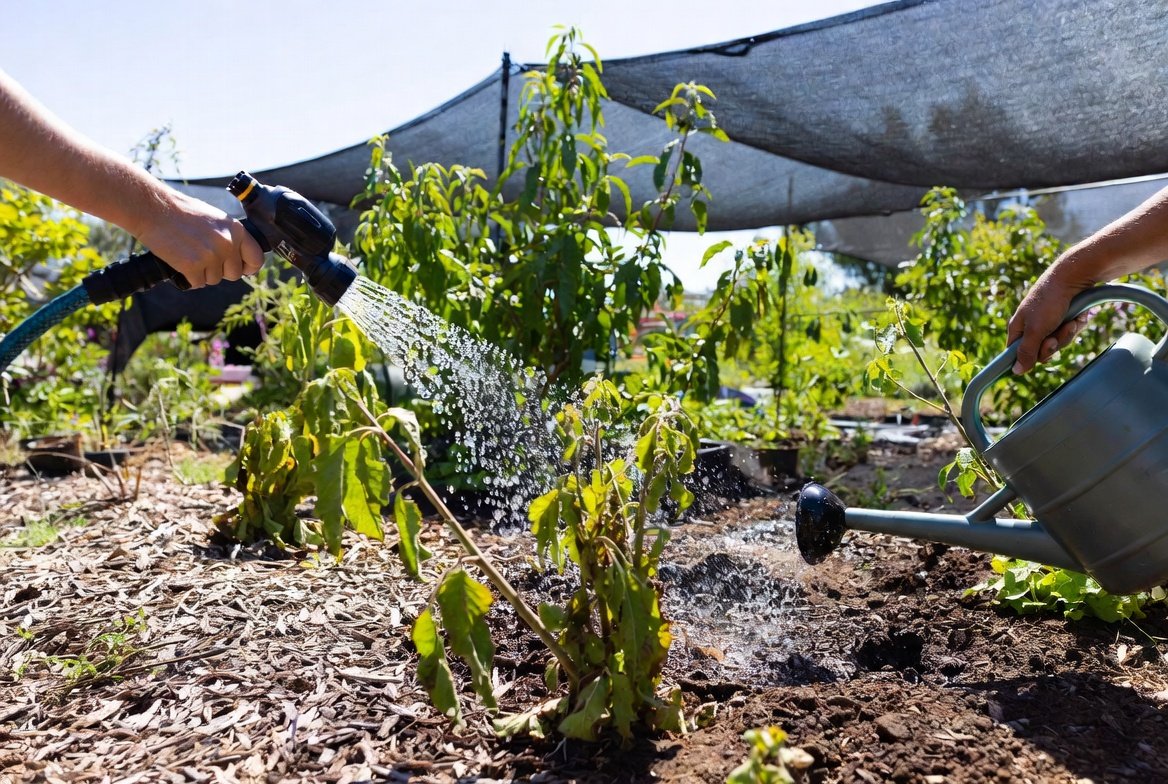
The timing of watering plants in hot weather matters more than the volume. Water early in the morning or late in the evening. If you water at midday, up to 50% of the water evaporates in the heat before it reaches the roots. And ignore the myth about water droplets scorching leaves like magnifying glasses; it rarely happens, but the evaporation waste is real. Water at the base of the plant, not the leaves. A good soak at the roots twice a week is better than a light daily sprinkle, which just encourages shallow roots that dry out faster. If there is a hosepipe ban in your area, use a watering can and save your bathwater or washing-up water (cooled, and without heavy grease) for established borders.
The Lawn: Let It Go Brown
A brown lawn is not a dead lawn. UK grasses are cool-season varieties like ryegrass and fescue. When it gets hot and dry, they shut down and go dormant to survive. It looks awful, but brown grass recovery happens naturally when the autumn rains return. Watering a lawn in a heatwave uses huge amounts of water for a temporary green flush. Save the water for your pots. If you must mow, raise the blades on your mower to the highest setting. Never scalp a lawn in hot weather; cutting it short exposes the roots to the sun and heat, and it will struggle to recover.
Pots: The Most Vulnerable
Container plants are the first to die in a heatwave because they cannot draw water from the ground. Terracotta pots are the worst offenders; the clay absorbs heat and the compost dries out in hours. Move them into the shade if possible. Group them together; this creates a humid microclimate and stops the wind drying them out. Stand them in saucers of water so they can draw moisture up from the bottom, but remove the saucers once the heatwave breaks to stop the roots rotting. Watering plants in hot weather that are in pots means checking them daily. If the compost has shrunk away from the sides of the pot, water will just run down the gaps; water slowly, wait, and water again.
Shade and Mulch
Protecting plants from heat isn’t just about water; it’s about stopping the soil from baking. A 5cm layer of mulch over damp soil locks in moisture and keeps the roots cool. For delicate seedlings or leafy veg like lettuce, rig up some temporary shade. A piece of shade netting or even an old bedsheet suspended on canes will drop the temperature underneath by a few degrees and stop the leaves scorching. In my experience, a bit of shade cloth in July is the difference between a surviving crop and a dead one.
Conclusion
You now know that surviving a heatwave is about triage, deep watering, and leaving the lawn alone. In the next 10 minutes: go and move your most vulnerable pots into the shade. Today: check your mower height and make sure the blades are set to the highest notch. This week: buy a bag of bark mulch and lay it thickly over your damp borders to lock in the moisture. Stop panicking about the brown grass and start focusing the water where it actually matters.