Native plants are some of the most useful plants you can grow in a British garden. They suit the climate, support local wildlife, and often need less fuss once they’re settled. That doesn’t mean they’re all easy, tidy, or suitable for every space.
This guide is for UK gardeners who want a garden that looks good and does more for birds, bees, butterflies and other wildlife. It’s not a purist’s list. You don’t need to rip out every non-native plant and start again. A few well-chosen native plants can make a real difference, especially if they provide flowers, berries, seeds, shelter or leaves for caterpillars.
The trick is choosing native plants that fit your soil, space and style of garden. A small patio needs different plants from a large rural plot with hedges and trees.
What Counts as a Native Plant?
A native plant is one that arrived or developed naturally in Britain without being introduced by people. These plants have grown alongside native insects, birds and other wildlife for a very long time, which is why they can be so valuable in gardens.
That said, “native” doesn’t automatically mean “perfect”. Some native plants are too large for small gardens. Some spread vigorously. Some need poor soil, wet soil, chalk, shade or space to do well.
In my experience, the best native planting starts with the garden you actually have, not an idealised wildflower meadow from a seed packet. If your soil is heavy clay, choose plants that cope with clay. If your garden is shaded, don’t force sun-loving meadow flowers into it and hope for the best.
Quick Guide: Best Native Plants by Garden Situation
Use this as a starting point before buying plants or seed.
| Garden situation | Good native choices | Why they work |
|---|---|---|
| Small sunny border | Oxeye daisy, field scabious, wild marjoram, red campion | Colour, nectar and manageable size |
| Partial shade | Foxglove, primrose, red campion, wood anemone | Good for woodland-style edges |
| Damp soil | Meadowsweet, ragged robin, yellow flag iris, purple loosestrife | Suits heavier, wetter ground |
| Wildlife hedge | Hawthorn, blackthorn, hazel, holly, dog rose | Blossom, berries, shelter and nesting cover |
| Dry sunny spot | Bird’s-foot trefoil, wild thyme, harebell, yarrow | Handles leaner soil and supports insects |
| Containers | Wild strawberry, chives, thyme, primrose | Compact, useful and easier to control |
The best choice is rarely one plant. It’s a mix that gives food and shelter across the year.
Hawthorn: One of the Best Native Shrubs
Hawthorn is one of the most valuable native shrubs for British gardens, especially if you have room for a hedge. It has white blossom in spring, red berries in autumn, and dense thorny growth that gives birds safe nesting cover.
It works well in mixed native hedging with blackthorn, hazel, holly, dog rose and field maple. If you only have space for one native hedge plant, hawthorn is hard to beat.
There is one catch. Hawthorn wants space and regular trimming if you’re using it as a hedge. It’s not ideal for a tiny border by the front door unless you’re prepared to keep it clipped.
Foxglove: Tall Colour for Shade and Cottage Borders
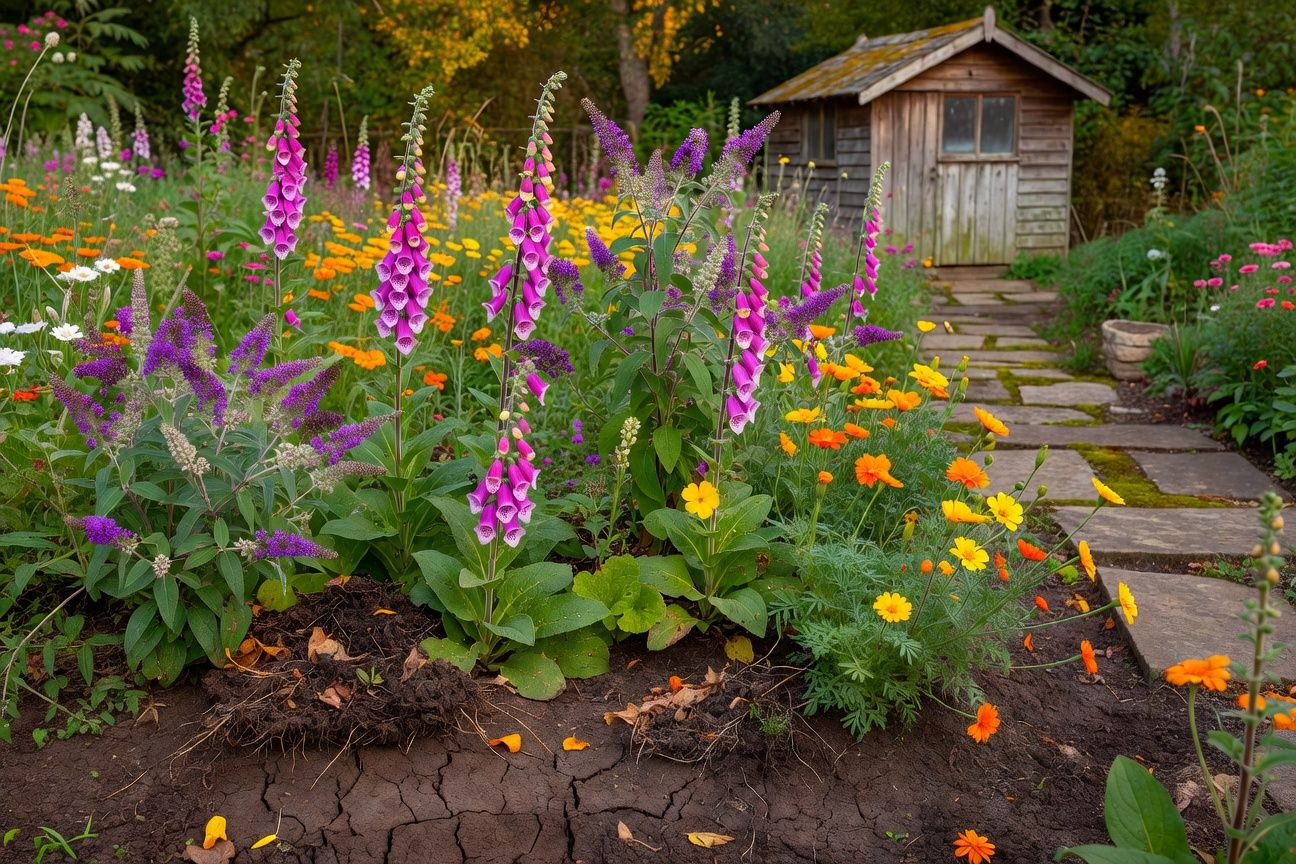
Foxgloves are brilliant for partial shade, woodland edges and cottage-style borders. Their tall flower spikes are loved by bumblebees, and they bring height without needing a huge footprint.
Most common foxgloves are biennial. That means they usually make leaves in the first year, flower in the second, then set seed. If you let them self-seed, they’ll often keep appearing around the garden.
They are poisonous if eaten, so think carefully if you garden with young children or pets that chew plants. You don’t need to panic, but you do need to be sensible.
Primrose: Early Food When Gardens Are Bare
Primroses are lovely native plants for the front of a border, under deciduous shrubs, or in a lightly shaded lawn edge. They flower early, often when the garden still feels half asleep.
Their pale yellow flowers are useful for early pollinators, and the plants are neat enough for small gardens. They suit moist but well-drained soil and look best in natural-looking groups rather than as single lonely plants dotted about.
If your garden is dry and baked in summer, plant primroses where they get spring light but some summer shade. Under shrubs or near a hedge can work well.
Red Campion: Easy Colour for Semi-Shade
Red campion is a cheerful native wildflower that does well in partial shade. It’s especially useful in the awkward strip along a fence, hedge or woodland-style border where many sun-loving flowers struggle.
It has pink flowers from spring into summer and can self-seed if it’s happy. That’s a benefit if you like relaxed planting, but less useful if you want everything in strict rows.
Pull out unwanted seedlings while they’re small. Easy. Leave the ones in good spots.
Oxeye Daisy: Classic Meadow Colour
Oxeye daisies bring that classic white-and-yellow summer look to sunny borders and meadow-style areas. They’re good for pollinators and mix well with grasses, knapweed, scabious and yarrow.
They prefer sun and soil that isn’t too rich. This surprises people. If you sow wildflowers into very fertile soil, grasses and vigorous plants often take over, leaving fewer flowers.
Oxeye daisies can spread, especially in the right conditions. In a large garden, that may be welcome. In a small border, deadhead some flowers before they seed everywhere.
Bird’s-Foot Trefoil: Small Plant, Big Wildlife Value
Bird’s-foot trefoil is a low-growing native wildflower with yellow pea-like flowers. It’s especially useful in sunny, dry, low-fertility spots, and it’s an important food plant for several butterfly caterpillars.
It works well in wildflower lawns, gravel edges, banks and informal sunny borders. It won’t give you the big impact of a dahlia, but it earns its space quietly.
This is the sort of plant many gardeners overlook because it isn’t showy in a garden-centre pot. Wildlife doesn’t care about that.
Wild Marjoram: A Native Herb Worth Growing
Wild marjoram is one of the best native plants for sunny borders. It has clusters of pinkish-purple flowers in summer, aromatic leaves, and strong appeal for bees and butterflies.
It likes free-draining soil and full sun. Once established, it copes well with drier conditions, which makes it useful in hotter summers and gravel-style planting.
You can also use the leaves in cooking, though the flavour is usually milder than cultivated oregano. It’s a good plant for gardeners who want something attractive, useful and wildlife-friendly.
Ivy: More Valuable Than Many People Realise
Ivy divides opinion. Some gardeners see it as a nuisance, but it’s one of the best native plants for wildlife when managed properly.
Its late flowers provide nectar when many other plants have finished, and its berries feed birds in winter. Dense ivy also gives shelter to insects and nesting birds.
The key word is managed. Don’t let ivy smother small shrubs or climb into weak trees unchecked. On a sturdy wall, fence or old stump, it can be extremely useful. On a tiny trellis next to delicate planting, it may become too much.
Hazel: A Great Choice for Larger Gardens
Hazel is a native shrub or small tree that suits larger gardens, wildlife areas and mixed hedges. It has catkins in late winter and early spring, nuts in autumn if conditions allow, and leaves that support insects.
It can also be coppiced, which means cutting stems back near the base to encourage fresh growth. That’s useful if you want a traditional look or need to control size.
Hazel is not the best choice for a very small garden unless you’re happy to prune it. It can get broad and leafy, and it needs room to look natural.
Dog Rose: Flowers, Hips and Hedge Value
Dog rose is a native climbing or scrambling rose with simple pink or white flowers followed by red hips. It’s excellent in hedges and informal boundaries.
The flowers are good for insects, while the hips provide autumn and winter food for birds. It also adds a looser, more natural feel to a hedge.
Don’t plant it where you need a neat, compact shrub. Dog rose likes to sprawl. Give it a hedge, fence or wilder corner, and it makes much more sense.
Native Plants for Ponds and Damp Gardens
If you have a pond or damp patch, native plants can be especially useful. Water forget-me-not, marsh marigold, ragged robin, purple loosestrife and meadowsweet all bring colour and wildlife value.
Marsh marigold gives bright yellow flowers in spring and suits pond margins. Ragged robin is lovely in damp meadow-style planting. Meadowsweet has creamy summer flowers and a sweet scent, but it needs space.
Be careful with yellow flag iris in small ponds. It’s native and beautiful, but it can grow strongly. In a small pond, keep it in a basket so you can control it.
Should You Plant a Wildflower Meadow?
A wildflower meadow sounds easy. It usually isn’t.
For a proper wildflower meadow, you need low-fertility soil, good preparation and regular cutting at the right time. Scattering a packet of seed onto a weedy lawn rarely works well. The existing grass is usually too strong.
If you want the look without the battle, start smaller. Create a mini meadow strip, add plug plants into a lawn, or plant native perennials in a sunny border. You’ll get better results and less frustration.
This is the high-friction reality: native planting still needs gardening. It needs choosing, planting, editing and patience.
Best Native Plants for Small Gardens
Small gardens can still support native plants. You just need to avoid anything that wants to become a tree, thicket or meadow.
Good choices include primrose, wild strawberry, red campion, chives, wild marjoram, bird’s-foot trefoil, harebell, oxeye daisy and field scabious. For shade, try foxglove, wood anemone and native ferns if the soil suits them.
If you want a small native shrub, consider dog rose only if you can give it support and pruning. For very tight spaces, a few native perennials in pots may work better than a hedge plant squeezed into the wrong place.
How to Buy Native Plants Responsibly
Try to buy from reputable nurseries that state plants are UK native or grown from British-origin seed where possible. This matters more for wildflower projects and ecological planting than for a small ornamental border, but it’s still worth checking.
Avoid digging plants from the wild. It can damage local habitats, and some wild plants are legally protected. Buy seed, plugs, bulbs or potted plants instead.
Peat-free compost is also worth using. There’s little point creating a wildlife-friendly garden while using compost linked to peatland damage.
What to Do Next
Next 10 minutes: look at your garden and choose one area where native plants would actually suit the conditions. Is it sunny, shaded, damp, dry, small or spacious?
Today: choose three native plants with different jobs. For example, primrose for early flowers, wild marjoram for summer nectar, and hawthorn for berries and shelter if you have hedge space.
This week: buy from a reputable supplier, prepare the soil properly, and plant in groups rather than single scattered plants. Water new plants during dry spells in their first season.
The best native plants for British gardens are not always the rarest or most unusual. They’re the ones that fit your garden and keep giving something back: flowers for insects, berries for birds, shelter for small creatures, and a garden that feels more alive each year.