A typical UK terraced garden is roughly three to four metres wide. When you stand at the back door and look down a narrow strip bounded by high fences, it can feel like standing in a corridor. Most people try to fix this by keeping things sparse or painting everything white. That usually backfires. Making a small space feel larger is about tricking the eye, not just clearing the deck. This is for anyone looking for small garden ideas that go beyond buying compact furniture. Whether you own your home or rent, there are structural changes and quick fixes here that will shift the proportions. The secret is manipulating boundaries, lines, and levels rather than simply buying smaller things.
The Boundary Illusion: Why Dark Colours Win
The standard advice is to paint fences white to brighten a small space. It is well-intentioned but flawed. White paint catches the light, which draws your eye directly to the boundary. It highlights the box you are standing in. Dark colours do the opposite. A fence painted in dark green, slate grey, or even black absorbs light and makes the edges recede. Your brain stops registering the physical barrier, and the garden feels deeper. If you rent and cannot paint the fence, lean tall plants or dark trellis panels against it to achieve the same effect. In a north-facing garden that is already gloomy, stick to dark green rather than black to avoid making it feel like a cave.
| Fence Treatment | Visual Effect | Best For |
|---|---|---|
| White/Light Wood | Highlights boundaries, feels boxy | Large gardens needing definition |
| Dark Green/Grey | Edges recede, feels spacious | Small, sunny courtyards |
| Black | Boundaries vanish, looks elegant | Small, bright spaces; avoid shady plots |
Drawing the Eye: Layout and Lines
How you lay the floor changes how long the garden feels. If you run paving slabs or decking boards parallel to the side boundaries, you emphasise the width but make the garden feel shorter. Running them diagonally or pointing them down the length towards the end of the plot pulls the eye outward. This is one of the most effective small garden landscaping tricks because it alters perception without changing the physical footprint. Keep the paving simple. A busy pattern makes the floor feel cluttered. In a good patio garden design, paving should cover no more than one-third of the space; the rest should be planting or lawn to soften the edges.
Growing Upwards: The Vertical Advantage
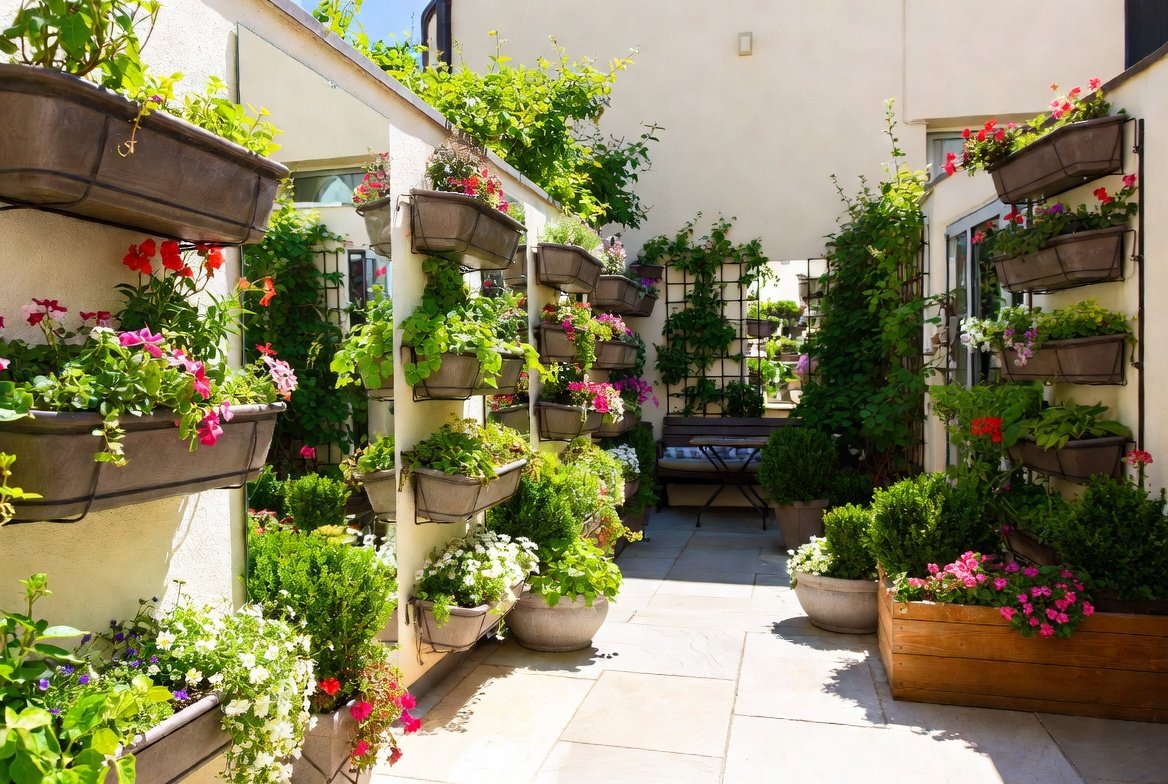
When you cannot spread out, you have to go up. Vertical gardening is the most efficient way to add greenery without sacrificing floor space. Covering the walls with climbers like ivy, clematis, or star jasmine hides the hard edges of the fence and makes the garden feel like it continues into the planting. Use wall-mounted troughs or a simple trellis system. Tall, narrow plants like Italian cypress or fastigiate yew act as vertical exclamation marks. They draw the eye up, making the ceiling feel higher. Overplant slightly. A sparse garden shows every inch of its boundaries; a densely planted one hides them.
Furniture and Scale: Less is Not More
Choosing the right furniture is critical. Avoid the chunky, rectangular dining sets that dominate catalogues. They swallow the space. Instead, choose pieces that let light and air pass through. Wirework chairs, slimline metal frames, or built-in bench seating along a boundary work best. Built-in seating doubles as storage for cushions and tools, clearing the deck when you are not using it. Round tables are better than square ones because they allow easier circulation around them. In a compact patio garden design, keep the number of seats to what you actually use daily, not the maximum you might need once a year.
The Reality Check: Skip the Mirrors
You have probably read that leaning a mirror against a fence makes the garden look twice as big. In theory, it reflects the planting and creates an illusion of depth. In practice, outdoor mirrors fog up with condensation, get splattered with rain, and collect grime. Within a month, the reflection looks dull and obvious. Worse, birds often fly into them. A better way to draw the eye is a focal point at the far end of the garden. A large pot, a statue, or a distinct plant gives the eye a destination, which creates a sense of journey and distance. It is a safer, more reliable garden design tip than relying on a fragile illusion.
Conclusion
You now know that making a garden feel bigger is about manipulating what the eye sees, not just clearing clutter. Dark boundaries recede, diagonal lines stretch, and verticals lift the gaze. In the next 10 minutes: walk to the end of your garden and look back at the house. Notice where your eye gets stuck—that is the boundary or clutter you need to address first. Today: if you have a light-coloured fence, buy a tin of dark green or slate grey fence paint and test a panel. The difference is immediate. This week: clear the floor space. Remove anything you do not use daily and consider adding a simple trellis to start drawing the eye upwards. In my experience, applying these garden design tips and painting the fence is the single highest-impact change you can make in a weekend.