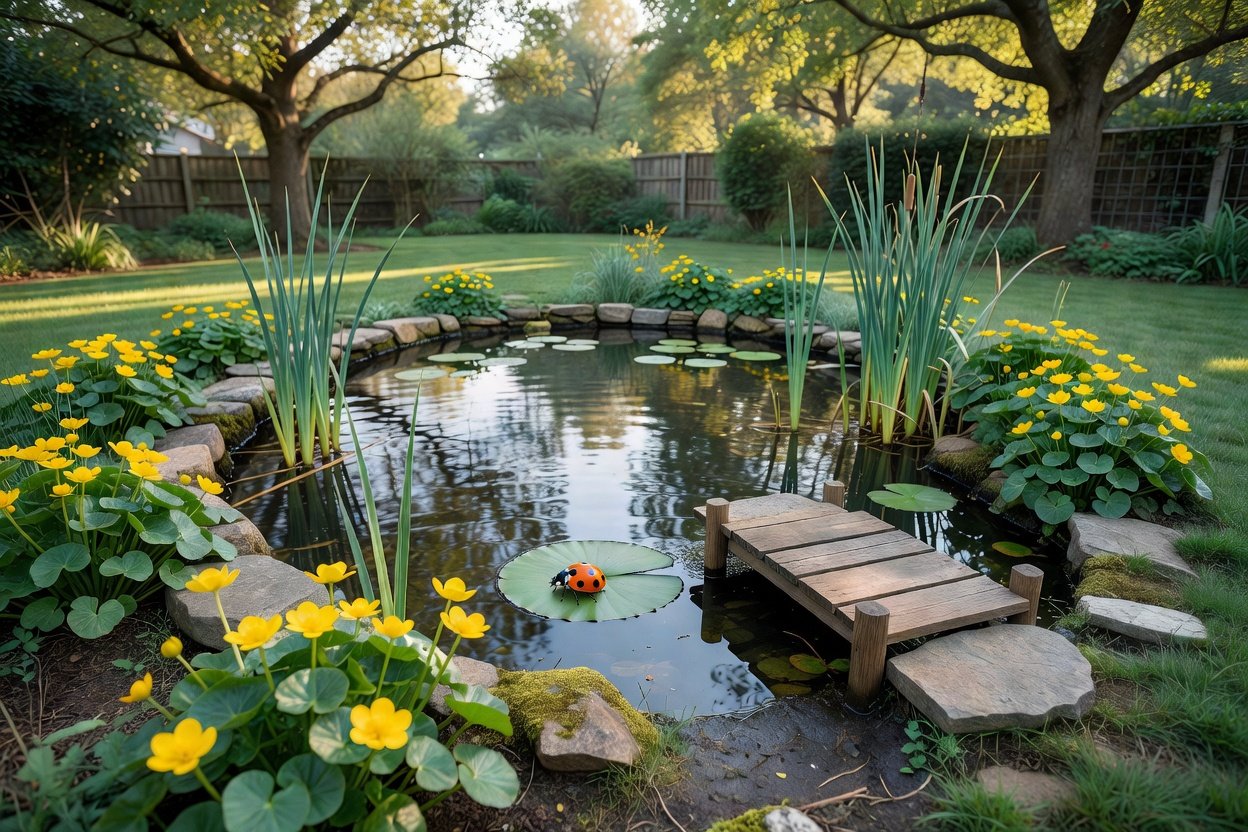
A wildlife pond is one of the quickest ways to make a British garden feel alive. Even a small pond can attract birds, bees, hoverflies, frogs, newts, dragonflies and all the tiny pond creatures most of us haven’t thought about since primary school.
This guide is for UK gardeners who want a wildlife pond in a back garden, not a formal koi pond or a high-maintenance water feature. You don’t need a huge plot. You do need a safe position, shallow edges, the right plants and a bit of patience.
The basic idea is simple: make clean, still water with easy access in and out. Wildlife will do much of the rest.
Start With the Right Type of Pond
A wildlife pond is different from an ornamental fish pond. It’s designed for habitat first, which means shallow areas, planting, natural edges and no fish.
Fish may look appealing, but they eat tadpoles, insect larvae and other pond life. They also stir up sediment, which can make the water cloudy. If your main aim is wildlife, skip the fish.
You also don’t need a pump or fountain. Many pond creatures prefer still or gently settled water. A fountain can disturb the surface too much and may make the pond less useful for insects that lay eggs in calm water.
Here’s the surprise: a small, shallow pond can be better for wildlife than a deep, tidy one with steep sides. The edges matter more than the middle.
Quick Decision Guide: What Kind of Wildlife Pond Suits Your Garden?
Use this before you start digging. It’s much easier to choose the right pond now than to fix an awkward one later.
| Garden situation | Best pond type | Why it works |
|---|---|---|
| Small back garden | Mini pond in a tub or half-barrel | Low cost, easy to place, good for insects and birds |
| Family garden with young children | Raised or fenced pond | Safer access control, still useful for wildlife |
| Sunny lawn edge | Lined wildlife pond | Good light for plants and dragonflies |
| Shady garden | Small planted pond with shade-tolerant margins | Still useful, though fewer flowering pond plants |
| Clay soil | Lined pond or compacted clay pond if suitable | Holds water better, but liner is more predictable |
| Patio garden | Container pond | No digging, easy to manage |
If you’re unsure, start small. A washing-up bowl sunk into the ground can still become a real wildlife feature if it has stones, plants and a safe exit route.
Choose the Best Position
The best place for a wildlife pond is somewhere with sun for part of the day and a little shade. Around four to six hours of sunlight is a good target.
Too much deep shade can limit plant growth and keep the pond cold. Full sun all day can warm a tiny pond quickly in summer, which may encourage algae and reduce oxygen. A bit of balance helps.
Avoid putting the pond directly under deciduous trees if you can. Falling leaves can rot in the water and make it murky. If the only available spot is near trees, use a net in autumn or scoop leaves out regularly.
Think about how water moves through your garden. Don’t put the pond where lawn feed, patio cleaner, paint washings or fertiliser runoff can drain into it. Pond life is sensitive. Dirty water causes problems fast.
Make It Safe Before You Make It Pretty
Safety comes first, especially in gardens used by children. Even a shallow pond can be dangerous for a toddler.
If young children visit or live in the house, consider a raised pond, a rigid grille just below the surface, a fence, or a lockable gate to that part of the garden. Don’t assume “they’ll know not to go near it”. They won’t.
Also think about pets, elderly relatives and night-time access. A pond right beside a narrow path may be a trip hazard. Good edging matters.
Wildlife needs safety too. Steep-sided ponds trap hedgehogs, frogs and birds. Always include a beach, ramp, pile of stones or sloping side so anything that falls in can get out.
Size, Depth and Shape
A wildlife pond doesn’t need to be huge. Even 60cm across can help, but a larger pond is more stable because the water temperature changes more slowly.
For a back garden pond, a depth of around 45–60cm in the deepest part is usually enough. You don’t need a deep pit unless you’re creating a large pond. Most wildlife activity happens in the shallow shelves and edges.
Create at least one shallow shelf around 10–20cm deep for marginal plants and visiting birds. A gently sloping beach is even better. This is where frogs can enter, bees can drink, and birds can bathe.
Avoid a perfect bowl shape. It looks neat on paper but gives wildlife fewer useful zones. Irregular edges and different depths are better.
What You’ll Need
For a simple lined wildlife pond, you’ll need a pond liner, underlay, a spade, a spirit level or straight plank, sand or old carpet for extra protection, stones or turf for edging, and aquatic plants.
EPDM rubber liner is a good long-term option. It costs more than cheap plastic liner, but it’s usually more flexible and longer lasting. Butyl liner is also strong, though often pricier.
Preformed rigid ponds can work, but they’re less flexible in shape and harder to level properly. Many also have steep sides, so you may need to add stones or ramps for wildlife access.
This is the high-friction reality: digging and levelling take longer than people expect. A small pond can still be a full weekend job if the ground is stony, full of roots or heavy clay.
How to Dig and Line the Pond
Mark the pond shape with a hosepipe, rope or sand. Stand back and check it from the house, patio and main path. You’ll notice odd shapes more easily before digging.
Dig the pond in stages, creating shelves as you go. Keep the edges level, or one side will show liner when the pond is full. Use a plank and spirit level across the hole to check.
Remove sharp stones, roots and rubble. Add a layer of sand or soft soil, then underlay. Old carpet can work under the proper underlay, but avoid anything treated with chemicals.
Lay the liner loosely into the hole and let it fold naturally. Don’t stretch it tight. Add water slowly, adjusting folds as the pond fills. Trim the liner only after the pond has settled and you’re sure the water level is right.
Use Rainwater if You Can
Rainwater is best for a wildlife pond. Tap water contains nutrients and treatment chemicals that can encourage algae, especially in a new pond.
If you have a water butt, use that. If not, tap water is not the end of the world, but let the pond settle before judging it. New ponds often go green before they clear.
Don’t add bottled pond “cleaners” as a first response. A new wildlife pond needs time to balance. Plants, shade and low nutrient levels are the real long-term fix.
Never fill the pond with water from a ditch, stream or another pond. It can carry diseases, invasive plants or unwanted organisms. Let wildlife arrive naturally.
Choose the Right Plants
Plants make the pond work. They provide shelter, oxygen, egg-laying sites and landing places for insects.
Aim for a mix of submerged oxygenators, marginal plants and a few floating or surface-covering plants. In a small pond, don’t overplant. Plants grow.
Good native or wildlife-friendly choices include water forget-me-not, marsh marigold, purple loosestrife, water mint, brooklime, hornwort and frogbit. For pond edges, ragged robin and meadowsweet can work well if the surrounding soil stays damp.
Be careful with vigorous plants. Yellow flag iris is native and beautiful, but it can dominate a small pond. If you use it, keep it in a basket and be ready to divide it.
Buy from reputable aquatic nurseries and avoid plants listed as invasive. Don’t take plants from the wild. It damages habitats and can spread pests or diseases.
Don’t Add Frogspawn
It’s tempting to “start” the pond by adding frogspawn from somewhere else. Don’t.
Frogs, newts and other amphibians are good at finding suitable ponds on their own. Moving spawn can spread disease and may be harmful if the pond conditions aren’t right. It’s better to create the habitat and wait.
Wildlife arrives in stages. First you may see midges, pond skaters and birds drinking. Then beetles, dragonflies, frogs or newts may appear. Sometimes it takes a year or two.
That delay is normal. The pond isn’t failing. It’s settling.
Make the Edges Wildlife-Friendly
The pond edge is where many wildlife ponds succeed or fail. A hard ring of paving slabs may look tidy, but it offers little shelter.
Use stones, logs, turf, low planting and gravel to soften the edges. Leave small gaps and hiding places. Frogs and newts need cover when they leave the water.
A boggy edge can be brilliant if you have space. This is simply a damp planting area beside the pond where moisture-loving plants can grow. It helps the pond blend into the garden and gives insects more habitat.
Don’t make every edge accessible to people. One clear viewing or dipping point is enough. Let the rest be for wildlife.
Keep the Pond Healthy
A wildlife pond should not need much maintenance, but it isn’t completely hands-off. You’ll need to remove excess leaves, thin overgrown plants and check the water level in dry spells.
In autumn, scoop out fallen leaves before they sink and rot. In summer, top up with rainwater if the level drops badly. Some water loss is normal.
If blanket weed appears, twist it out with a stick and leave it beside the pond for a day so small creatures can crawl back in. Then compost it. Don’t panic at the first sign of algae.
Avoid cleaning the pond too thoroughly. A spotless pond is not the aim. Mud, plant stems and quiet corners are part of the habitat.
Common Mistakes to Avoid
The first mistake is making the sides too steep. Wildlife needs easy access, and shallow edges are more useful than a dramatic deep centre.
The second is adding fish. If wildlife is the goal, fish usually work against it.
The third is overfilling the pond with plants on day one. Aquatic plants can grow strongly, especially once they settle.
The fourth is giving up too soon. A new pond can look underwhelming for months. Then one warm day you’ll spot a dragonfly, or a blackbird bathing, and it suddenly makes sense.
A Simple Weekend Plan
If you’re building a small lined pond, plan it as a weekend job rather than a quick afternoon task. Rushing the levelling is what causes most regrets.
Next 10 minutes: choose the best position and check it from the house. Look for partial sun, safe access and no obvious runoff from patios, drains or treated lawns.
Today: decide the size, mark the shape, and make a shopping list. Include liner, underlay, stones for a ramp, and a small number of suitable pond plants.
This week: dig, line and fill the pond, then plant lightly and leave it alone. Don’t add fish, frogspawn or pond water from elsewhere.
A wildlife pond is one of the few garden projects where doing less often gives better results. Build the shape well, keep the water clean, give creatures a way in and out, and resist the urge to interfere. If the habitat is right, the wildlife will usually find it.