Slugs and snails can undo a week’s worth of careful gardening in one damp night. In the UK, where mild winters and wet springs are common, they’re not an occasional nuisance. They’re part of the gardening calendar.
This guide is for home gardeners who want to protect seedlings, hostas, dahlias, strawberries, lettuce and young veg without reaching for harsh chemicals. It’s especially useful if you have pets, children, wildlife, a small garden, or you’re trying to garden in a more nature-friendly way.
The honest answer is that you won’t remove every slug or snail. You don’t need to. The aim is to protect vulnerable plants at the right time, reduce hiding places, and make your garden less convenient for the worst damage.
First, Work Out What They’re Actually Eating
Slugs and snails don’t attack everything equally. They love soft, young, lush growth. That’s why lettuce seedlings, new dahlias, young beans, marigolds, delphiniums and hostas often get shredded while tougher plants nearby are left alone.
The worst damage usually happens overnight or after rain. You may see ragged holes in leaves, missing seedlings, shiny slime trails, or stems chewed at soil level. If a plant vanishes completely, slugs are likely suspects, but don’t blame them automatically. Pigeons, caterpillars, rabbits, vine weevil larvae and even poor watering can cause similar heartbreak.
Here’s the bit many people miss: you don’t need to defend the whole garden. You need to defend the few plants that are at their most vulnerable. A three-week-old lettuce seedling needs protection. A mature rosemary bush doesn’t.
Use the Right Method for the Right Situation
Slug control works best when you combine small, practical steps. One barrier or trap rarely solves the problem on its own.
| Method | Best for | How well it works | Watch out for |
|---|---|---|---|
| Night patrols | Seedlings, dahlias, hostas | Very effective if repeated | Needs effort after rain |
| Copper tape or rings | Pots and raised beds | Useful when clean and dry | Less reliable when dirty or bridged by leaves |
| Wool pellets | Pots, containers, young plants | Helps as a barrier and mulch | Can be patchy in very wet weather |
| Beer traps | Local slug hotspots | Can reduce numbers nearby | May attract more slugs if placed badly |
| Nematodes | Vegetable beds, moist soil | Good for soil-dwelling slugs | Need correct soil temperature and moisture |
| Wildlife habitat | Long-term balance | Helps over time | Not an instant fix |
| Resistant planting | Borders and tricky gardens | Reduces damage naturally | No plant is completely immune |
If you only do two things, protect young plants physically and remove slugs by hand during wet evenings. It’s not glamorous. It works.
Protect Seedlings Before the Damage Starts
Seedlings are the easiest meal in the garden. Once they’ve been eaten down to a stump, there’s often nothing left to save.
Start protection early. Use cloches, collars, raised trays, mesh covers or clear plastic bottle cloches over newly planted seedlings. Even a temporary barrier for the first two or three weeks can make the difference between a crop and a bare patch.
For vegetables, it often helps to grow plants on in modules until they’re bigger. A sturdy young lettuce, bean or brassica plant has a better chance than a tiny seedling sown straight into slug-heavy soil. This is especially true in wet springs.
Don’t plant out weak, soft plants straight from a warm windowsill. Harden them off gradually and avoid overfeeding them with nitrogen-rich feed. Very soft growth is slug food with a label on it.
Make Pots and Containers Harder to Climb
Pots are easier to defend than open borders, which is good news for small gardens. Slugs and snails still find their way in, but you have more control.
Raise pots on feet or bricks so you can check underneath. Slugs love hiding under container rims, saucers and damp pot bases. Remove saucers unless the plant genuinely needs one, because they create damp shelter.
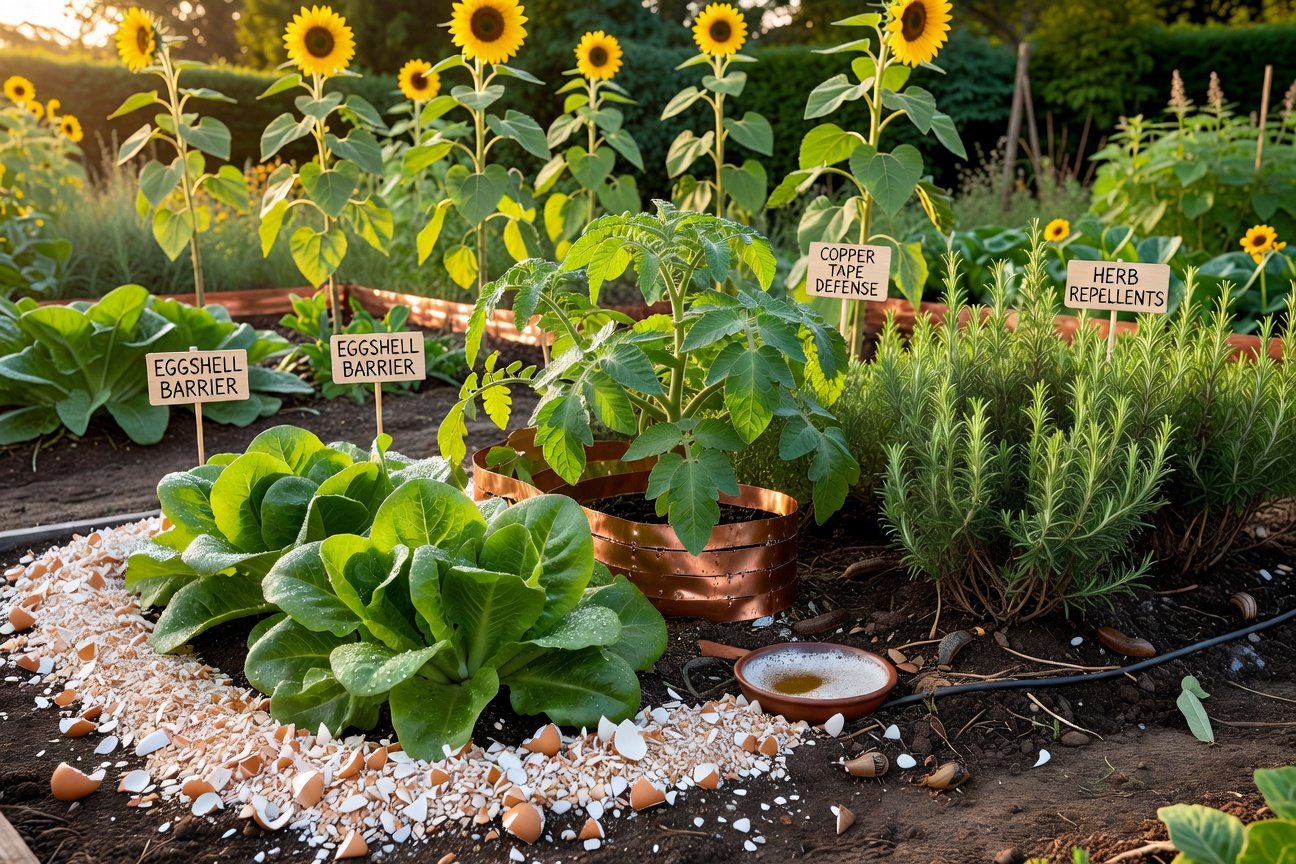
Copper tape can help around pots, but only if it forms a complete ring and stays reasonably clean. Leaves touching the ground can create a bridge straight over it. Soil splashed onto the tape also reduces its usefulness.
Wool pellets, sharp grit and rough mulches can slow slugs down, but don’t treat them as force fields. In a wet British summer, a determined slug can cross more than you’d think.
Use Barriers, But Don’t Expect Miracles
Barriers work best as part of a system. They’re most useful around pots, raised beds, seed trays and individual high-value plants.
Copper rings around hostas, dahlias or young veg can help. Plastic collars made from cut bottles can protect seedlings from early attacks. Fine mesh can keep birds and butterflies off crops too, which is handy when you’re not entirely sure who’s causing the damage.
Eggshells are often recommended, but the results are mixed at best. They break down, get wet, and rarely form a serious barrier. Coffee grounds are also unreliable and can affect soil if used heavily.
The non-obvious trick is to stop plants touching the barrier. If a hosta leaf flops over a copper ring and touches the soil outside, you’ve built a slug bridge. Most people don’t notice until the leaves look like lace.
Try Night Patrols After Rain
Hand-picking is one of the most effective chemical-free methods. It’s also the one many gardeners avoid because, well, it involves picking up slugs.
Go out with a torch after dusk, especially after rain or watering. Check around pots, under leaves, along path edges, near compost bins and around the base of vulnerable plants. Drop slugs and snails into a bucket and move them well away from the plants you’re trying to protect.
If you don’t want to touch them, use tongs, gloves or an old spoon. No judgement.
This is the high-friction reality: during peak season, you may need to do this several nights in a row. One heroic patrol in April won’t protect lettuces until July.
Use Traps Carefully
Beer traps can catch slugs, but placement matters. Put them too far from vulnerable plants and you may draw slugs through the garden. Put them near the plants you’re protecting, but not right against the stems.
Sink the trap so the rim sits just above soil level. Empty it regularly, because old traps become foul quickly. They’re useful in specific hotspots, not as a whole-garden solution.
You can also use refuge traps. Lay down a damp piece of cardboard, a wooden board, a roof tile or a half grapefruit skin near problem areas. Slugs hide underneath during the day, and you collect them in the morning.
This method is simple and cheap. It’s also oddly satisfying.
Encourage Natural Predators
A garden with more wildlife often has fewer severe slug problems over time. Frogs, toads, hedgehogs, birds, ground beetles and some centipedes all eat slugs or slug eggs.
You don’t need a wild garden to help predators. A small pond, log pile, leaf litter in a quiet corner, mixed planting and fewer pesticides all help. Ground beetles need shelter at soil level, so a garden stripped bare every autumn is less useful for them.
Be careful with slug pellets if you’re encouraging wildlife. Metaldehyde pellets are no longer allowed for outdoor use in the UK, and many gardeners now avoid pellets altogether. Ferric phosphate pellets are widely sold, including for organic systems, but they’re still a control product. Use them only according to the label if you decide they’re necessary.
The bigger point is this: predators need time. A frog won’t appear the day after your lettuce gets eaten.
Water in the Morning, Not at Night
Watering habits can make slug damage worse. Slugs are most active in damp conditions, so evening watering creates a perfect night-time feeding route.
Water in the morning where you can. Plants still get what they need, but the soil surface has more time to dry before night. This is especially useful around salad crops, young beans and tender bedding.
Drip irrigation or careful watering at the base of plants can also help. Soaking the whole bed every evening may keep plants alive, but it also helps slugs travel.
Of course, during hot dry weather, thirsty plants come first. Don’t let a crop fail just to keep the surface dry. Gardening always has trade-offs.
Remove Slug Hotels
Slugs need damp hiding places. If your garden has lots of them beside vulnerable plants, you’re making life easy.
Check under loose pots, old grow bags, piles of leaves, unused trays, flat stones, timber offcuts and dense low foliage. Compost bins and water butts can also be slug hotspots, especially if they sit near vegetable beds.
You don’t need to make the garden sterile. Wildlife needs cover too. The aim is to move slug shelters away from the plants they like eating most.
Keep the area around seedlings more open until plants are established. Later, when plants are stronger, you can allow the border to fill out.
Choose Plants Slugs Usually Leave Alone
If slugs destroy the same border every year, change the planting. It’s better than fighting the same battle forever.
Plants often avoided by slugs include lavender, rosemary, sage, thyme, euphorbia, geraniums, ferns, foxgloves, astrantia, alchemilla, Japanese anemones, ornamental grasses and many woody shrubs. They may still get nibbled when young, but they’re usually less attractive than hostas or delphiniums.
For vegetables, choose stronger transplants, grow cut-and-come-again leaves in pots, and protect beans, lettuce and brassicas when young. Red-leaved lettuces sometimes suffer less than soft green types, though no lettuce is safe in a bad slug year.
Hostas are the classic problem plant. If you love them, grow them in pots, use copper bands, keep them raised, and check underneath often. If you’re tired of the fight, switch to ferns or hardy geraniums in shady spots.
Consider Nematodes for Vegetable Beds
Nematodes are microscopic organisms that target slugs in the soil. They’re sold as a biological control and watered into the ground.
They can be useful in vegetable beds, raised beds and areas where young plants keep disappearing. They work best when the soil is moist and warm enough, so follow the packet timing carefully. In cold soil, they won’t do much.
Nematodes mainly help with soil-dwelling slugs rather than every snail crawling in from a wall or hedge. That’s why they’re useful, but not magic.
They also cost more than a torch and a bucket. For a small veg patch with repeated losses, they may be worth it. For a large mixed garden, targeted use makes more sense.
What to Avoid
Avoid salt. It kills slugs in a pretty grim way, damages soil and can harm plants. It has no place in normal garden slug control.
Avoid pouring chemicals around borders without knowing what problem you’re solving. You may harm useful insects, pets or soil life, and still lose plants because the real issue is timing or habitat.
Avoid relying on one trick. Copper tape, eggshells, beer traps, coffee grounds, wool pellets and nematodes all have limits. The best results come from layering methods: stronger plants, cleaner growing areas, barriers, patrols and wildlife.
Most of all, avoid waiting until everything has been eaten. Prevention is much easier than rescue.
A Simple Slug-Control Plan
Start with your most vulnerable plants. Don’t waste energy protecting the whole garden equally.
Next 10 minutes: walk around and identify the top three slug targets. Check under pots, leaves and trays nearby, and remove any obvious hiding places.
Today: protect young plants with collars, cloches, copper rings or raised pots. Water in the morning if possible, and set one refuge trap near the worst area.
This week: do two or three torch patrols after rain, grow seedlings on until they’re sturdier, and add wildlife-friendly shelter away from your veg or prized plants.
Keeping slugs and snails away without harsh chemicals is really about making damage less likely. You protect plants when they’re young, reduce damp hiding spots, use barriers where they make sense, and accept that a few chewed leaves are part of gardening in Britain. The goal isn’t a slug-free garden. It’s a garden where your plants still get to grow.