A small garden can still grow proper fruit. The trick is not choosing the smallest-looking tree in the garden centre. It’s choosing the right fruit, the right rootstock, and the right trained shape for the space you actually have.
This guide is for UK gardeners with compact back gardens, patios, narrow borders, new-build plots or one sunny fence they want to use better. It’s not for orchard owners. It’s for people who want apples, pears, plums, cherries or figs without planting something that blocks the kitchen window in five years.
The main thing to know is simple: fruit trees are controlled more by rootstock and training than by the fruit variety itself.
Start With Rootstock, Not Variety
Most fruit trees are grafted. That means the tasty fruiting variety is joined onto a separate root system, called the rootstock. The rootstock strongly affects how big the tree becomes.
This is where many beginners get caught out. They choose an apple variety they recognise, such as ‘Cox’ or ‘Bramley’, without checking whether it is on a dwarf, semi-dwarf or vigorous rootstock. The label matters.
For small British gardens, look for dwarf or semi-dwarf rootstocks. Apples on M27, M9 or M26 are common choices, depending on how much space you have. Pears are often sold on Quince C or Quince A. Plums may be on Pixy or St Julien A, while cherries may be on Gisela 5 or Colt.
The surprise is that a dwarf tree is not always easier. Very dwarfing trees can need permanent staking, regular watering and better soil because their root systems are smaller. Small does not mean self-sufficient.
Quick Guide: Best Fruit Trees for Small Gardens
Use this as a starting point before buying. The best choice depends on sun, soil, shelter and how much time you’ll give the tree.
| Fruit tree | Best small-garden form | Why it works | Watch out for |
|---|---|---|---|
| Apple | Dwarf bush, cordon, espalier | Reliable, many UK-suitable varieties | Some need a pollination partner |
| Pear | Espalier, cordon, small bush | Good use of warm walls and fences | Blossom can be hit by late frost |
| Plum | Dwarf bush or fan-trained | Heavy crops from one tree | Can outgrow small spaces if too vigorous |
| Cherry | Dwarf bush, fan, patio tree | Good for pots and sunny spots | Birds love the fruit |
| Fig | Fan-trained or large pot | Likes restricted roots and warmth | Needs winter shelter in colder areas |
| Apple crab | Small ornamental tree | Blossom, fruit and wildlife value | Fruit is usually for jelly, not fresh eating |
| Apricot | Fan-trained against a wall | Possible in warm sheltered gardens | Blossom is vulnerable to frost |
If you only have room for one fruit tree, an apple is usually the safest bet. If you have a warm sunny wall, a pear, fig or fan-trained cherry can make better use of that vertical space.
Apples: The Best All-Round Choice
Apples are usually the best fruit trees for small British gardens because they’re hardy, productive and available in many trained forms. You can grow them as small bushes, cordons, espaliers, step-overs or patio trees.
For very small gardens, cordon apples are brilliant. They grow as narrow, sloping or upright stems and can be planted along a fence or path. Espalier apples take more training but look tidy and use fence space well.
Check pollination before buying. Some apple trees are self-fertile, but many crop better with another compatible apple nearby. In built-up areas, neighbouring gardens may already have apple trees, but don’t rely on that unless you know what’s around.
‘Discovery’, ‘James Grieve’, ‘Egremont Russet’ and ‘Fiesta’ are often good garden apples, though local conditions still matter. If you like cooking apples, remember that ‘Bramley’ can grow strongly, so choose the rootstock carefully.
Pears: Excellent on a Sunny Wall
Pears can be very rewarding in a small garden, especially when trained against a warm wall or fence. They like shelter, sun and decent drainage.
Espalier pears are a good choice because they keep the tree flat against a boundary while giving you blossom and fruit. Cordon pears also work if space is tight. A small bush pear can be fine too, but it needs room to breathe.
Pear blossom opens fairly early, which means frost can damage it. If your garden is a frost pocket, pears may be less reliable than apples. A south or west-facing wall can help, though it can also encourage blossom to open early.
‘Conference’ is popular because it is partly self-fertile and widely grown in the UK. ‘Concorde’ is another strong option for gardens. I usually recommend beginners start with a pear variety known to crop reliably rather than chasing unusual varieties straight away.
Plums: Great Crops, But Give Them Space
Plums can produce generous harvests from a small tree. When they’re happy, they really crop.
For small gardens, choose a dwarf or semi-dwarf tree and avoid overly vigorous rootstocks unless you have space. A fan-trained plum against a wall can work well, though it needs pruning at the right time. Plums are generally pruned in summer, not winter, to reduce the risk of silver leaf disease.
Many plums are self-fertile, which makes them useful if you only have room for one tree. ‘Victoria’ is the classic garden plum, but it can crop so heavily that branches may need support. ‘Czar’ and ‘Opal’ are also commonly grown.
The high-friction reality is that plums can make a mess. Ripe fruit drops, wasps arrive, and a heavy crop needs picking quickly. If your tree overhangs a patio, you’ll notice.
Cherries: Best If You Can Protect the Fruit
Cherries are lovely in small gardens, but you need a plan for birds. Blackbirds and starlings can strip a tree just as the fruit ripens.
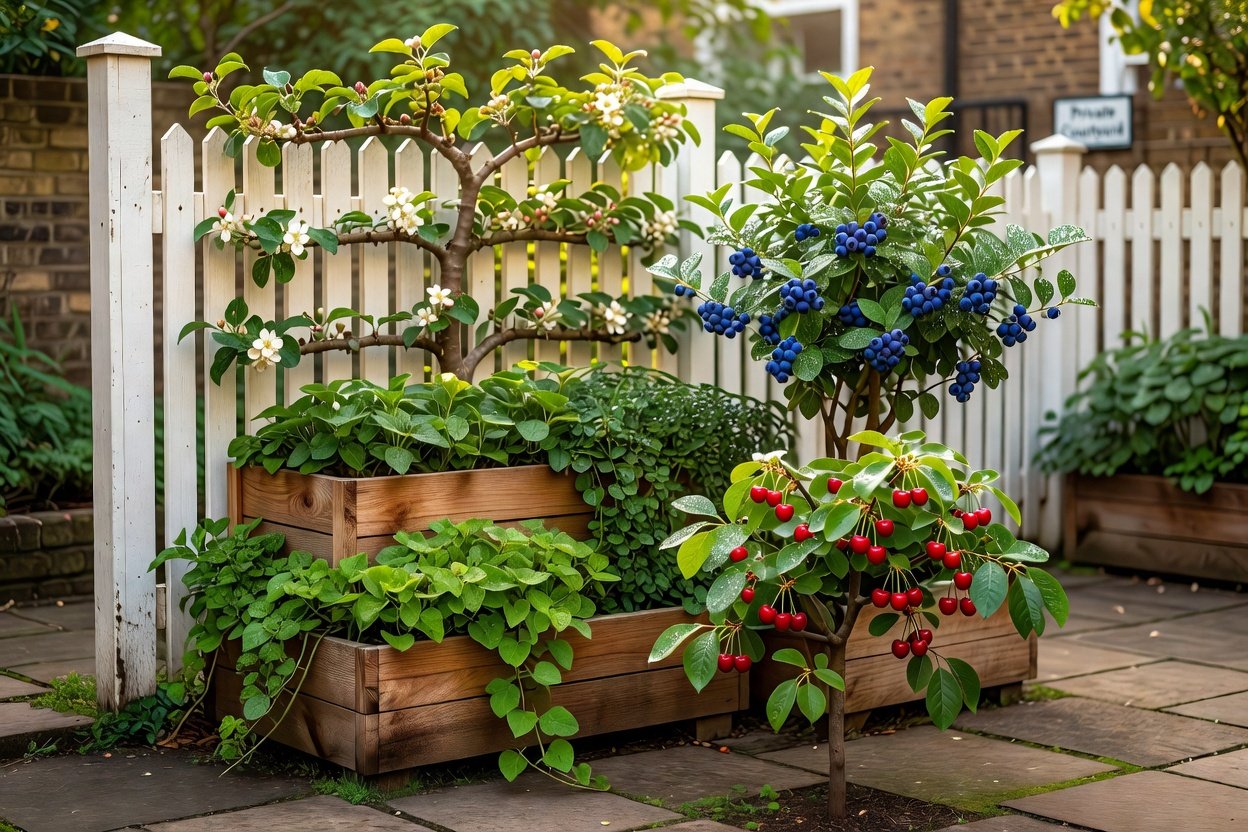
Modern dwarfing rootstocks have made cherries much more practical for gardens than they used to be. A cherry on Gisela 5, for example, is far more manageable than an old-style large cherry tree. You can grow dwarf cherries in the ground or in a large pot.
Fan-training against a sunny wall is a good option. It keeps the tree flatter and makes netting easier. If you grow a freestanding cherry, think about how you’ll reach and protect the crop before it gets taller.
Choose a self-fertile variety unless you know you have a compatible cherry nearby. ‘Stella’, ‘Sunburst’ and ‘Lapins’ are common self-fertile choices.
Figs: Surprisingly Good for Small Spaces
Figs are one of the best small-garden fruit trees because they actually benefit from root restriction. That makes them well suited to large pots, raised beds or planting pits lined with slabs.
They need sun and warmth. A south-facing wall is ideal in much of the UK. In colder or exposed areas, figs may still grow but fruit may struggle to ripen.
‘Brown Turkey’ is the usual beginner fig because it is hardy and widely available. It is not the most glamorous fig, but it is dependable. That counts.
Figs can grow strongly if planted in open ground with unrestricted roots. If space is tight, keep them in a large container or restrict the roots in the ground. Otherwise a “small” fig can become a leafy beast.
Patio Fruit Trees: Useful, But Read the Label
Patio fruit trees are sold as the easy answer for small gardens. Sometimes they are. Sometimes they’re just young trees in small pots.
Before buying, check the rootstock, final height, pot size and whether the tree is self-fertile. A genuine patio apple or cherry on a dwarfing rootstock can be a good choice, but it still needs watering, feeding and pruning.
Container fruit trees need more attention than trees in open ground. Pots dry out quickly in summer and nutrients run out. Use a large container, ideally at least 40–50cm wide for many dwarf fruit trees, and choose a loam-based compost where appropriate.
This costs more than people expect. The tree, pot, compost, feed, mulch and support can easily cost more than a simple bare-root tree planted in the ground.
Trained Fruit Trees Save the Most Space
If you have a fence or wall, trained fruit trees are often better than freestanding trees. They use vertical space and leave the rest of the garden open.
Cordons are narrow and productive. Espaliers are wider, with horizontal arms, and work well for apples and pears. Fans suit stone fruit such as plums, cherries, peaches and apricots. Step-over apples are very low trained trees, often used as edging.
Trained trees need pruning and tying in. There’s no point pretending otherwise. But the work is controlled and seasonal, not constant.
For a small garden, one well-trained espalier apple can be more useful than three random trees squeezed into a lawn. It will look intentional too.
Bare-Root or Potted Trees?
Bare-root fruit trees are sold while dormant, usually from late autumn to early spring. They are often cheaper, establish well, and give you more choice of rootstock and variety.
Potted fruit trees are available for more of the year and are convenient if you want to buy when you see them. They are useful for beginners, but the choice can be narrower and the price higher.
If you can plan ahead, bare-root is usually the better value. Plant while the tree is dormant and the ground is workable, not frozen or waterlogged. Water well after planting and mulch around the base.
For pots, spring planting is often easiest because the tree can start growing as the weather improves. Just don’t let a newly potted fruit tree dry out in its first summer.
Where to Plant a Fruit Tree in a Small Garden
Most fruit trees need sun. Aim for at least six hours of direct summer sun for the best crops, especially for cherries, figs, plums and pears.
Shelter matters too. Wind can damage blossom, dry out leaves and make pollination harder. A warm fence or wall can make a real difference, particularly in cooler parts of the UK.
Avoid planting in a frost pocket if you can. Cold air settles in low spots, and spring blossom is vulnerable. If late frost is common in your garden, apples usually cope better than apricots or peaches.
Keep trees away from drains, walls and foundations unless you know the mature size and rootstock. Small trees have smaller root systems, but they still need space and water.
Pollination: The Bit People Forget
Some fruit trees are self-fertile, meaning they can set fruit with their own pollen. Others need a compatible partner flowering at the same time.
Apples and pears are the main ones to check carefully. Labels often mention pollination group, self-fertility and suitable partners. If it sounds confusing, ask a specialist fruit nursery rather than guessing.
In towns and suburbs, nearby trees can help with pollination. Bees don’t care about garden boundaries. But if you’re in a more isolated spot, a self-fertile variety is safer.
For one-tree gardens, choose self-fertile where possible. It removes a lot of uncertainty.
Best Choices for Different Small Gardens
For a tiny patio, choose a dwarf apple, cherry or fig in a large pot. Keep the watering simple by placing it near the house, where you’ll see it often.
For a narrow fence, grow cordon apples or pears. You can fit several varieties along a boundary and keep them slim with summer pruning.
For a sunny wall, try a fan-trained cherry, fig or pear. If the wall is very warm and sheltered, an apricot may be possible, but it’s not the beginner’s safest option.
For a wildlife-friendly garden, consider a small apple or crab apple. Blossom feeds pollinators, fruit feeds birds, and the tree gives structure without dominating the plot.
What to Do Next
Next 10 minutes: measure the space where you want the tree to grow. Check height, width, sun and whether you have a wall or fence you could use.
Today: choose the fruit type that suits the position. Apple for reliability, pear for a warm wall, plum for generous crops, cherry if you can net it, fig for a sunny sheltered spot.
This week: look up the rootstock before buying. For small gardens, the rootstock is as important as the variety. If the label doesn’t tell you, don’t buy it.
The best fruit trees for small British gardens are not just small trees. They are trees matched to the space, trained sensibly, and bought on the right rootstock. Get that right at the start, and you can have blossom, fruit and a tree that still fits the garden years later.